
Why it matters
It gives steampunk and clockwork fantasy a real-time strategy form, especially through the Vinci faction's machines, cities, airships and mechanical armies.
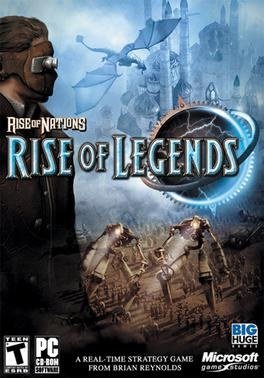
Rise of Nations: Rise of Legends takes real-time strategy away from history and into a world where clockwork armies and magical factions can argue over resources at scale.
Developed by Big Huge Games and released in 2006, Rise of Nations: Rise of Legends is a fantasy spin on the strategy tradition of Rise of Nations. Instead of staying with historical nations, it builds a world of distinct factions, with the Vinci providing the strongest steampunk signal: clockwork devices, industrial cities, mechanical soldiers, flying machines and an obvious debt to Renaissance-engineer fantasy.
The Vinci are the key reason the game belongs here. Their name points toward Leonardo da Vinci, but the execution pushes into steampunk and clockwork spectacle. They are a faction of machines, gears, metal and engineered force. Strategy games need visual clarity, and the Vinci deliver it through silhouettes of mechanical power.
The game's faction structure is useful because it frames steampunk as one world-view among others. The Vinci do not exist alone. They stand beside magical and alien-tinged rivals, making technology part of a wider fantasy contest. This places Rise of Legends near works such as Arcanum, where magic and machinery share a world uneasily. The difference is scale. Arcanum makes the argument through roleplaying choices; Rise of Legends makes it through armies.
Real-time strategy also changes the meaning of invention. Machines become production lines, units, upgrades and battlefield identity. A clockwork walker is not merely an artwork; it is a thing to build, deploy and lose in an expensive mistake. That is a very strategy-game way of understanding steampunk: progress as economy, logistics and conflict.
The game's visual mix is also important. It is not Victorian London steampunk. The Vinci draw from Renaissance fantasy, industrial design and clockwork imagination. That makes the game more clockpunk in places, but the broad family resemblance is clear: alternate technology, ornate machines, mechanical cities and a world where invention becomes political force.
Its place beside Steel Empire is one of scale. Steel Empire gives us steam war through arcade action. Rise of Legends gives us clockwork war through strategic command. Both understand that retro-futurist machinery can become military spectacle, though one asks for reflexes and the other asks why you did not defend the flank.
The game also belongs to the mid-2000s moment when steampunk imagery was moving comfortably through mainstream game genres. It did not need to be a literary adaptation or a niche RPG. It could sit inside an RTS and be understood instantly through faction design.
Is it really steampunk?
Adjacent to core, with a strong clockwork emphasis. Rise of Legends is fantasy RTS first, but the Vinci faction's machines, cities, airships and clockwork armies make it a significant steampunk strategy title.
It suits players who want gears not as decoration, but as a build queue with consequences.
Find it
If you would like to track down Rise of Nations: Rise of Legends, these search links may help. We have not specified an edition, so you can pick the format that suits you.
Affiliate links: as an Amazon Associate, Stephen Hunt’s SFcrowsnest earns from qualifying purchases. These may earn us a small commission at no extra cost to you.