
Why it matters
It carries the arcade steampunk shooter line into the 2010s, using walking machines, industrial war, twin-stick action and a warm brass-and-bullets palette.
Gatling Gears is a twin-stick shooter about stomping around in armed machinery, which is one of the less subtle ways to announce that negotiations have failed.
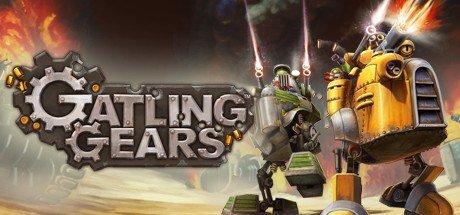
Developed by Vanguard Games and released in 2011, Gatling Gears puts the player in a small walking combat machine and sends it through a world of tanks, turrets, factories and heavy opposition. It is not a grand roleplaying world or a deep alternate history. It is a mechanical action toy with enough industrial flavour to make the battlefield feel like a workshop that has lost its temper.
The title belongs to the same broad family as Steel Empire, Progear and The Chaos Engine. Those earlier games helped show how steampunk could work as arcade action: aircraft, machines, scrolling danger and the immediate pleasure of moving through a designed storm. Gatling Gears updates that energy for twin-stick play, where movement and firing become a constant dance of machinery and panic.
Its steampunk quality comes through vehicle design and atmosphere more than setting detail. The player machine has the chunky appeal of a toy soldier's nightmare: legs, guns, armour and a sense that someone built it because wheels were insufficiently dramatic. The environments are industrial without becoming grimly realistic. This is a world of conflict as mechanical spectacle.
The game also sits near dieselpunk, thanks to its war machines and heavier combat mood. That border is useful rather than disqualifying. Steampunk and dieselpunk share a fascination with retro machinery, industrial force and alternative technological histories. Gatling Gears leans toward the later, grubbier military end, but the walking contraptions and ornate combat spaces keep it in the steampunk neighbourhood.
As a Dutch-developed title, it also broadens the geography of the game canon a little. Steampunk video-game history is often told through Japanese RPGs, American PC games and British oddities. Gatling Gears is not the most famous entry in the field, but it shows how widely the visual vocabulary had travelled by the early 2010s.
The environmental war theme gives it some bite. Machines are not only player empowerment. They chew up landscapes, fill the screen and turn progress into wreckage. The game does not dwell on that with literary seriousness, but the implication is there: mechanised conflict is exciting to play and terrible to live under, which is a tension many action games quietly leave smoking behind them.
Its value is modest but real. It is not a pillar like Arcanum or Dishonored, but it keeps the action-machine branch visible. Steampunk is not all salons, airships and puzzle boxes. Sometimes it is a squat little walker bristling with guns, making a strong case for staying indoors.
The small scale also helps it avoid overexplaining itself. Gatling Gears does not ask the player to memorise dynasties, treaties or a full map of industrial power. It offers a machine, a battlefield and a clear mechanical mood. That directness gives it a place among the more immediate, arcade-shaped expressions of the genre.
Is it really steampunk?
Adjacent to core, with diesel and arcade-shooter leanings. Gatling Gears uses mechs, industrial war, retro machinery and walking combat vehicles rather than Victorian society.
It suits players who like their steampunk loud, mobile and willing to solve architectural problems by shooting through them.
Find it
If you would like to track down Gatling Gears, these search links may help. We have not specified an edition, so you can pick the format that suits you.
Affiliate links: as an Amazon Associate, Stephen Hunt’s SFcrowsnest earns from qualifying purchases. These may earn us a small commission at no extra cost to you.