
Why it matters
It turns Wells's anti-gravity journey into colourful screen scientific romance, helped along by Ray Harryhausen's creature craft.
The 1964 First Men in the Moon sends Victorian science to the lunar surface with cavorite, a capsule and the useful assumption that the Moon has been waiting politely for visitors.
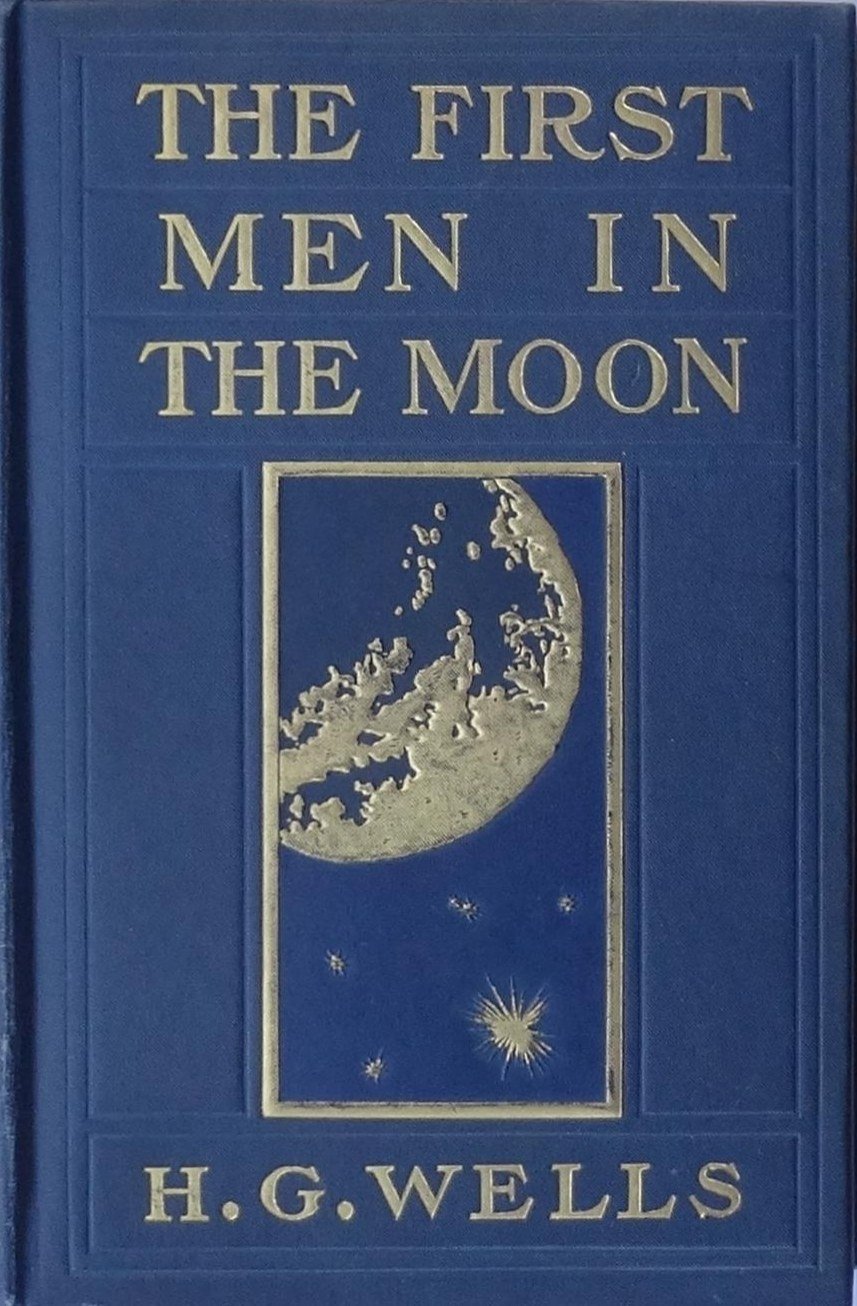
Directed by Nathan Juran with effects by Ray Harryhausen, First Men in the Moon adapts H. G. Wells's lunar adventure with a frame story that contrasts modern spaceflight with an earlier Victorian expedition. That framing is part of its charm. Before rockets and space programmes, the film says, there was an eccentric inventor, a marvellous substance and the usual British willingness to climb inside something alarming.
The central invention is cavorite, the anti-gravity material that allows Professor Cavor's sphere to escape Earth. For steampunk and proto-steampunk readers, this is a perfect scientific-romance device. It is not real engineering. It is a speculative key, opening the door between Victorian experiment and cosmic adventure.
The Moon itself supplies the other half of the appeal. The Selenites, underground chambers and strange lunar civilisation give the film its lost-world flavour. This is not modern astronomy. It is the Moon as imaginative territory, still close to A Trip to the Moon and the illustrated adventure tradition, where celestial bodies exist to be reached, explored and misunderstood by overdressed humans.
Harryhausen's contribution matters because the handmade effects help the film sit naturally in retrofuturist territory. Models, creatures and stagecraft give the adventure tactile oddity. The film feels built, not simply photographed, and that built quality is one reason later steampunk viewers can meet it halfway.
The frame story also gives the film a pleasingly cheeky relationship with the space age. Modern astronauts arrive expecting to be first, only to discover that Victorian eccentricity has already planted its flag in the guest book. That joke is very useful to retrofuturism. It says that the past had its own futures, and that some of them were bizarre enough to beat official history to the punch.
The Wellsian ancestry gives it a slightly different taste from Verne. Verne often loves apparatus, logistics and the romance of engineering. Wells is more mischievous and unsettling, more interested in what the journey reveals about human arrogance. The film leans towards spectacle, but it keeps enough of that unease to avoid becoming only a lunar postcard.
It also connects strongly to Space: 1889, which made Victorian space travel a full gameable premise. Cavorite belongs to the same dream cupboard as ether flyers, moon cannons and brass observatories: old science pushed sideways until it becomes adventure.
Purists may point out that the film is simply a Wells adaptation, not steampunk. Quite so. But steampunk did not invent Victorian space travel. It inherited it, embroidered it and occasionally bolted weapons to it. First Men in the Moon is one of the ancestors sitting in the workshop, wondering who keeps borrowing its tools.
Is it really steampunk?
It is proto-steampunk and Wellsian scientific romance. The film predates steampunk as a named genre, but its Victorian inventor, impossible substance, lunar voyage, strange civilisation and handmade retrofuturist imagery put it squarely in the ancestry cabinet.
It is best for viewers who enjoy old-school fantasy science and can accept lunar adventure on poetic rather than NASA-approved terms. The Moon may not be scientifically persuasive, but it has excellent manners as a setting.
Find it
If you would like to track down First Men in the Moon, these search links may help. We have not specified an edition, so you can pick the format that suits you.
Affiliate links: as an Amazon Associate, Stephen Hunt’s SFcrowsnest earns from qualifying purchases. These may earn us a small commission at no extra cost to you.