
Why it matters
It adds a French digital-age twist to gaslamp cinema, using Vidocq, alchemy and gothic crime as a dark retro spectacle.
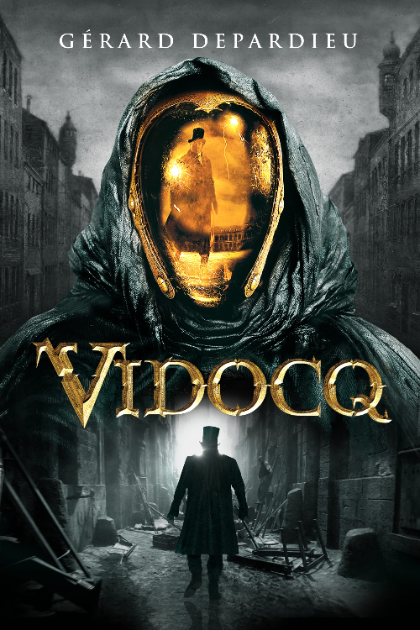
Vidocq drops a legendary French detective into a murky nineteenth-century Paris where alchemy, murder and masked menace all appear to have agreed on the same lighting scheme.
Directed by Pitof, Vidocq stars Gerard Depardieu as Eugene Francois Vidocq, the real-life criminal turned detective who became a lasting figure in crime history and fiction. The film is not a sober biopic. It is a stylised fantasy thriller involving investigation, a masked killer, alchemical motifs and a Paris that looks thoroughly unwell.
Its gaslamp fit is immediate. Nineteenth-century Paris, criminal investigation, occult suggestion, narrow streets and theatrical menace all belong to the same family as Holmesian and Gothic detective fiction. The difference is tonal: Vidocq is more feverish, more digitally worked, and more interested in visual assault than drawing-room deduction.
That visual excess is part of its place in the field. Early digital cinema gave the film an unreal, lacquered texture. Whether one loves that or backs away cautiously, it makes the film stand apart from more traditional period pieces. It is not trying to recreate the past with museum politeness. It wants the past to sweat, glare and misbehave.
The alchemy angle matters because gaslamp steampunk often thrives where science, occultism and crime overlap. Vidocq's Paris is not a rational police-procedural space. It is a city where bodies, secrets and forbidden knowledge crowd together. The machinery is less central than in core steampunk, but the atmosphere is strongly adjacent.
Vidocq himself is a useful figure for the wider map. Like Sherlock Holmes, he links detection to modernity: records, observation, urban crime and the attempt to make the city legible. Unlike Holmes, he carries the aura of the underworld as well as the police. That gives the film a rougher charge.
The masked-killer plot gives the film its Gothic engine. Identity, disguise and physical transformation all belong naturally to gaslamp fiction, especially in cities where the crowd can hide anything. The film leans into that unease, making detection feel less like tidy reasoning and more like moving through a fever.
It sits naturally beside The City of Lost Children and the Adèle Blanc-Sec stories in the French branch of retrofantastic Paris. These works share a taste for gloomy spectacle, strange science, grotesque figures and cities that feel like machines for producing secrets.
Purists may keep it outside core steampunk, and rightly so. It is gaslamp fantasy-thriller first, with steampunk-adjacent design and atmosphere rather than a full alternate technological society. Its importance is as a European borderland work: stylish, lurid and useful for mapping the Gothic-crime side of the field.
It also shows how the canon opens beyond English-language defaults. French retrofantasy brings its own police history, revolutionary memory, occult flavour and appetite for visual extremity. That makes Vidocq useful even when it is uneven: the map is larger and stranger with it included.
Is it really steampunk?
It is gaslamp and steampunk-adjacent, not core steampunk. The nineteenth-century setting, alchemy, investigative machinery of the modern city, masked killer and stylised retro atmosphere make it relevant without turning it into brass adventure.
It is best for viewers who like their period crime dark, French and visually overheated. Anyone seeking calm realism has wandered into the wrong arrondissement.
Find it
If you would like to track down Vidocq, these search links may help. We have not specified an edition, so you can pick the format that suits you.
Affiliate links: as an Amazon Associate, Stephen Hunt’s SFcrowsnest earns from qualifying purchases. These may earn us a small commission at no extra cost to you.