
Why it matters
It brings gentleman mystery, village secrets, quaint machinery and automaton revelation into a puzzle-game format with strong clockwork-adjacent charm.
Professor Layton and the Curious Village is a game in which everyone seems to have a puzzle ready, suggesting either civic enthusiasm or a serious local planning failure.
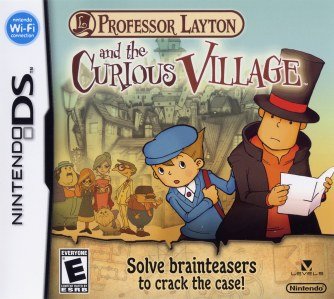
Developed by Level-5 and released in Japan in 2007, Professor Layton and the Curious Village introduced Professor Hershel Layton, his apprentice Luke and a world where mystery solving apparently requires an inexhaustible tolerance for riddles. The game is not steampunk in the industrial sense. It is gentler, stranger and more puzzle-box in temperament.
The clockwork connection lies in its automaton mystery and mechanical village atmosphere. Without spoiling too much of the pleasure, the game is built around secrets that make machinery and identity unexpectedly important. It belongs near the same delicate shelf as Syberia and The Great Mouse Detective: not heavy industry, but mechanisms, manners and mystery.
Layton himself is part of the appeal. Steampunk and gaslamp fiction have a long affection for gentleman investigators, eccentric scholars, detectives and people who can remain calm while standing beside an improbable device. Layton's courtesy, hat and analytical style place him in that lineage, even though the game uses a softer, storybook tone.
The village structure also matters. Rather than presenting machinery as battlefield technology or industrial capital, the game hides it inside community, architecture and puzzle design. Every conversation may become a riddle. Every location may conceal a mechanism. That makes the world feel artificial in the best sense: constructed, layered and waiting for the right question.
Its softness should not be mistaken for thinness. The game knows exactly what sort of machine it is building: a polite little mystery box with a theatrical reveal at its centre. That makes the clockwork elements feel earned rather than pasted on. The village is quaint, yes, but quaintness here is a cover for design.
Its puzzles are the game system and the theme at once. Players advance not by mastering machinery directly, but by thinking through problems. This gives Curious Village a cerebral charm that suits clockwork fiction. The brain becomes the key, and the key opens a village that may have rather more engineering behind it than the tourist board mentioned.
As a Japanese game with European storybook flavour, it also shows another route into steampunk adjacency. The setting is not historically specific in the way Sakura Wars uses Taisho modernity or Arcanum uses industrial fantasy. It is an imagined Europe of cobblestones, tea, manors, mysteries and machines. That vagueness is part of its charm. It feels like a postcard from a place that only exists when someone asks a puzzle.
The game earns its place because steampunk-adjacent canon needs room for quiet clockwork mystery as well as heavy engines. Not every machine has to conquer a nation. Some simply wait at the centre of a village, wrapped in a secret and guarded by a puzzle about matchsticks.
Is it really steampunk?
Adjacent. Professor Layton and the Curious Village is puzzle mystery first, but its gentleman-detective style, automaton plot, quaint mechanisms and clockwork atmosphere place it near the gentler edge of the field.
It suits players who like their machinery polite, their mysteries whimsical and their villagers unreasonably fond of brainteasers.
Find it
If you would like to track down Professor Layton and the Curious Village, these search links may help. We have not specified an edition, so you can pick the format that suits you.
Affiliate links: as an Amazon Associate, Stephen Hunt’s SFcrowsnest earns from qualifying purchases. These may earn us a small commission at no extra cost to you.