
Why it matters
It adapts one of the central modern gaslamp fantasy comics into tabletop form, carrying across Sparks, clanks, comedy adventure and the GURPS lineage of steampunk play.
The Girl Genius RPG takes Phil and Kaja Foglio's world of Sparks, clanks and operatic mad science and asks the only sensible gaming question: who let the players near the laboratory?
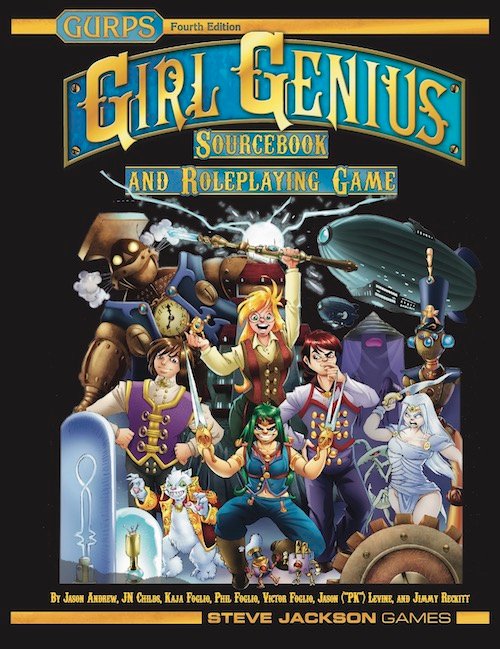
The Girl Genius Sourcebook and Roleplaying Game brings the Foglios' long-running comic world to the table through Steve Jackson Games. That makes it a late but natural arrival. Girl Genius has always been one of the genre's most playable worlds, even before dice entered the matter. It has factions, dynasties, secret laboratories, dangerous machines, social comedy, monster problems and enough reckless invention to keep a referee pleasantly alarmed.
The key concept is the Spark: the mad scientist as genius, hazard and social force. In many steampunk works, the inventor is a figure in the plot. In Girl Genius, Sparks are the plot, the weather and occasionally the reason the building now has legs. Turning that idea into an RPG matters because it makes invention a character condition rather than a decorative prop. Players do not merely find devices. They may be the sort of people who produce them at inconvenient speed.
Its connection to GURPS Steampunk is also important. Steve Jackson Games had already helped codify tabletop steampunk with William H. Stoddard's sourcebook in 2000. The Girl Genius RPG is different in purpose, of course. It is not a generic genre toolkit. It is a licensed setting book and game, tied to a particular world, tone and cast of ideas. Still, the lineage is pleasing. The workshop that helped classify the machinery later helped give one of gaslamp fantasy's great engines a playable chassis.
As an adaptation, the game has to manage tone. Girl Genius is funny, but not weightless. It is colourful, but not harmless. The setting works because comedy and danger are welded together. A clank may be adorable, murderous or both, depending on maintenance history and authorial mood. That is exactly the sort of tonal balance tabletop games can either honour or flatten. The RPG earns its place because the world is already built for campaign movement.
It also shows how steampunk moved through media. The field began with literary ancestors, then novels, comics, games, webcomics and subculture all fed back into each other. Girl Genius was especially important as a web-era fixture, making gaslamp fantasy feel ongoing and communal. The RPG closes a loop: a comic world shaped by adventure gaming and mad-science tradition becomes a game world in its own right.
The RPG's importance is less about replacing the comic and more about revealing its architecture. A good game adaptation exposes what a setting is made of. In this case: dynastic weirdness, invention as identity, theatrical Europe, monsters, romance, politics and the constant suspicion that no machine has ever been built with quite enough restraint.
Is it really steampunk?
Yes, with the same useful caveat as the comic. Girl Genius calls itself gaslamp fantasy, but its mad science, clanks, alternate Europe, Sparks and invention-driven culture make it core to modern steampunk and steampunk-adjacent canon.
It suits players who want science to be romantic, absurd, dangerous and possibly shouting from inside the cupboard.
Find it
If you would like to track down Girl Genius RPG, these search links may help. We have not specified an edition, so you can pick the format that suits you.
Affiliate links: as an Amazon Associate, Stephen Hunt’s SFcrowsnest earns from qualifying purchases. These may earn us a small commission at no extra cost to you.