
Why it matters
It shows how anime and manga can use alternate history and technology as comic disruption rather than solemn retrofuturist architecture.
Gintama looks at Edo-period Japan, adds alien occupation, motorbikes, parody, science-fiction nonsense and a hero with the energy of a man who has mislaid both history and rent money.
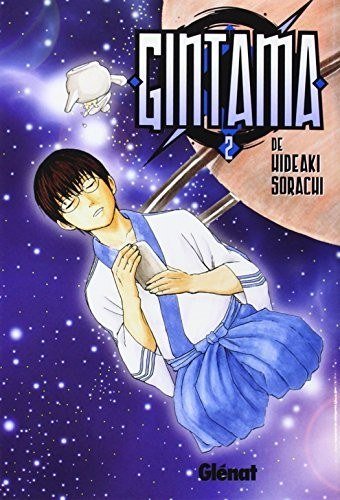
Hideaki Sorachi's Gintama is set in an alternate Edo where aliens known as the Amanto have invaded and transformed society. The result is a manga that gleefully mixes samurai leftovers, science-fiction technology, pop-culture parody, comedy, action and sudden emotional gut-punches. It is not steampunk, but it is very interested in what happens when history is invaded by the wrong props.
The steampunk adjacency lies in anachronism. Instead of Victorian Britain accelerated by steam, Gintama gives us Edo Japan disrupted by alien modernity. The joke is not only that old and new collide. The joke is that they collide constantly, shamelessly and with excellent timing.
This makes it useful beside works like Sakura Wars and other Japanese retro-tech fantasies, though Gintama is much more anarchic. It does not build a tidy alternate technological system. It throws technological absurdity into historical imagery and sees what breaks, usually after making a joke at someone's expense.
The setting also has a colonial and occupation undertone, even beneath the comedy. The Amanto's arrival has changed power structures, outlawed or marginalised the old samurai order and left characters negotiating a world where cultural identity has become unstable. The series often laughs loudly, but it knows disruption has a cost.
For steampunk readers, Gintama is a useful warning against narrowness. Retro-speculative fiction does not always arrive as airships and polite brass. Sometimes it arrives as an absurd Edo alien comedy that understands anachronism better than many serious works understand their own waistcoats.
The comedy also lets the series move between tones with alarming ease. One chapter may behave like a parody skit; another may remember the loneliness and displacement behind the jokes. That elasticity is part of why Gintama has such a strong fan reputation. The nonsense is often cover for a sharper emotional turn.
Its technology is not steampunk technology, but it performs a similar disruptive function. It makes the old setting unstable, exposes social shifts and gives characters new ways to be ridiculous or dangerous. That is enough to make it a useful neighbour, even while the classification stays firm.
Readers approaching from steampunk should come for the anachronism, not the boilers. The reward is a work that treats historical remixing as comedy, action and cultural argument all at once.
That makes it an odd but useful border entry. It reminds the map that alternate history can be irreverent, local and aggressively silly while still saying something about displacement and power. The jokes do not cancel the setting's premise; they keep it moving.
The audience fit is broad but specific. Readers who enjoy anime comedy, genre parody and samurai fiction colliding with science-fiction absurdity will understand the appeal quickly. Readers wanting consistent retro-tech may feel as if the timetable has been replaced by a punchline.
Is it really steampunk?
No. Gintama is alternate-history SF comedy and action manga, not steampunk. Its relevance is in the borderland: historical disruption, technological absurdity, occupation, anachronism and retro-cultural remixing.
Readers who need machinery to behave consistently may find it too chaotic. Readers interested in how manga plays with history, technology and genre should treat it as a valuable neighbour. It is not on the main rail line, but it keeps throwing useful objects onto the track.
Find it
If you would like to track down Gintama, these search links may help. We have not specified an edition, so you can pick the format that suits you.
Affiliate links: as an Amazon Associate, Stephen Hunt’s SFcrowsnest earns from qualifying purchases. These may earn us a small commission at no extra cost to you.