Why it matters
It is the most widely embraced anime version of Fullmetal Alchemist, giving the automail, state alchemy and military-conspiracy material its broadest screen form.
Fullmetal Alchemist: Brotherhood returns the Elric brothers to Arakawa's full story, where alchemy, automail and state power keep proving that knowledge has a nasty habit of joining the military.
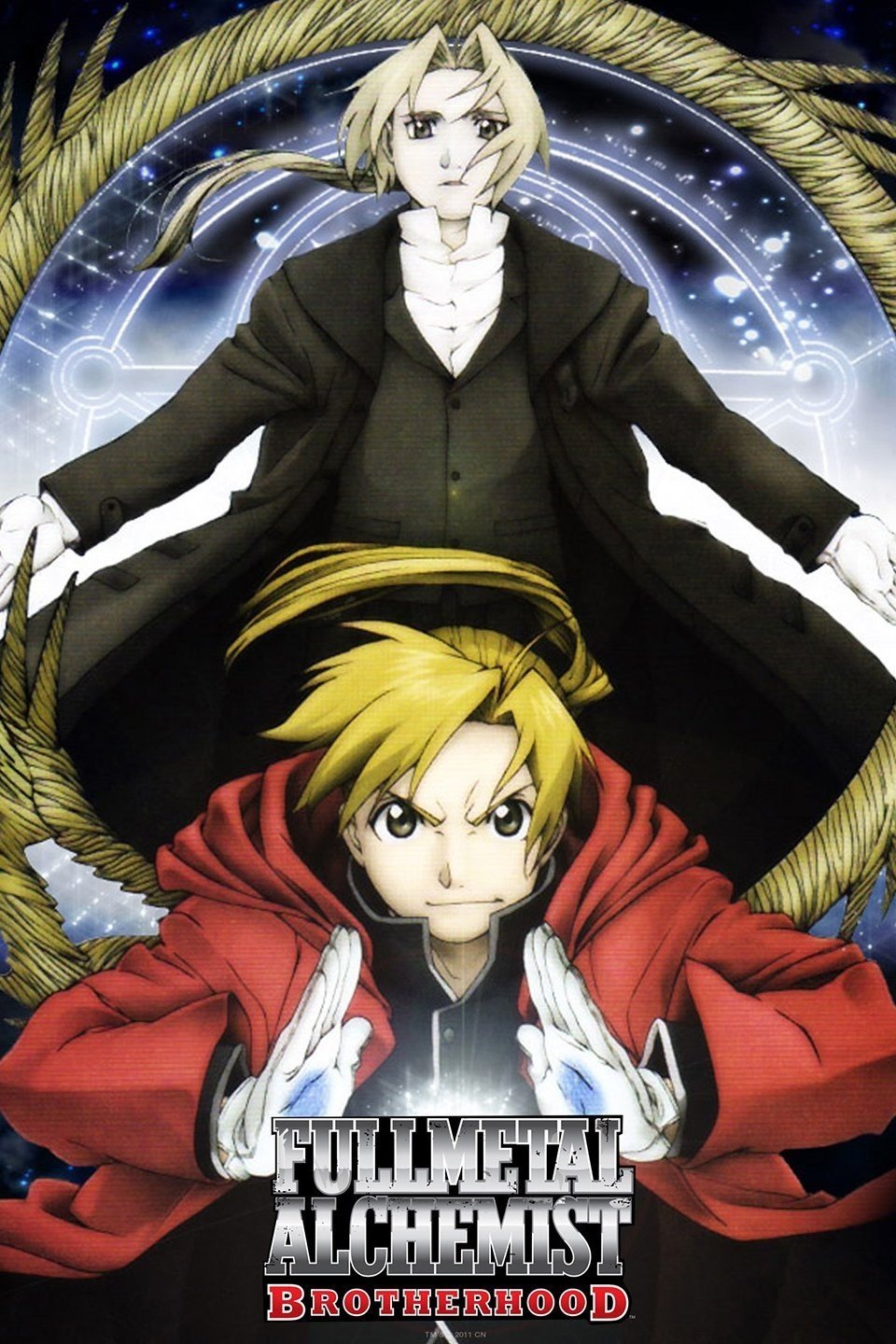
Directed by Yasuhiro Irie and produced by Bones, Brotherhood adapts Hiromu Arakawa's manga more closely than the 2003 television series. Edward and Alphonse Elric's search for restoration expands into a national conspiracy involving alchemy, war, bodies, state violence and the moral disaster of treating people as raw material.
Like the manga, Brotherhood is not steampunk in the narrow sense. Its engine is alchemy. Yet the world remains highly relevant to diesel-steam and steampunk-adjacent discussion: automail prosthetics, trains, militarised science, uniforms, workshops, laboratories and a technological level that sits in a deliberately old-fashioned modernity.
Automail is the crucial bridge. Edward's prosthetic limbs are not merely cool equipment. They make technology intimate, painful and ordinary. Maintenance, weather, combat and disability all pass through the body. Steampunk often loves visible machinery, but Brotherhood makes that visibility personal rather than decorative.
The series also sharpens the political scale. The military state is not background furniture. It is the machinery of the plot, with alchemists serving official power and discovering exactly how ugly that bargain can become. That gives the story a machine-age anxiety even when the power system is magical: institutions turn knowledge into policy, and policy into graves.
Compared with the 2003 anime, Brotherhood is broader, faster and ultimately more structurally complete. Its connection to the manga makes it the cleaner entry point for many viewers, while the earlier anime remains valuable for its own melancholy route and Conqueror of Shamballa aftermath.
Brotherhood matters because it made alchemical, retro-industrial fantasy internationally unavoidable. Plenty of viewers met machine bodies, military science and morally compromised knowledge through this series before they had any formal interest in steampunk. That gateway role is real, and the show carries it with considerable force.
The series is also useful because it balances intimacy and scale. Edward's automail is a personal, painful technology, while the national conspiracy turns knowledge into infrastructure. That movement from body to state is one of the reasons the work feels so close to machine-age fantasy. It understands that power begins with individual damage and ends with institutions trying to make that damage efficient.
Its popularity matters too. Borderland works can sometimes be obscure curiosities, but Brotherhood is not hiding in the catalogue. It helped make retro-industrial design, military alchemy and altered bodies part of the shared international language of anime fandom.
The homunculi, Ishvalan war history and state conspiracy also give the machinery moral scale. This is not only a story about clever boys and forbidden science. It is about what states do with knowledge once they have filed it, weaponised it and given it a uniform. That is where the diesel-steam adjacency becomes most interesting.
The series also has a rare breadth of audience. It works as adventure, tragedy, political fantasy, body-horror drama and family story. That range helps explain why its borderland machinery has travelled so far. Viewers remember the automail, but they also remember why the metal hurts.
Is it really steampunk?
Not strictly. Fullmetal Alchemist: Brotherhood is alchemical fantasy with diesel-steam adjacency. It belongs near steampunk through automail, industrial design, military science, trains, laboratories and anxiety over the uses of knowledge.
It suits readers who want the borderlands at their most emotionally and politically muscular. The gears are partly magical, but they still grind.
Find it
If you would like to track down Fullmetal Alchemist: Brotherhood, these search links may help. We have not specified an edition, so you can pick the format that suits you.
Affiliate links: as an Amazon Associate, Stephen Hunt’s SFcrowsnest earns from qualifying purchases. These may earn us a small commission at no extra cost to you.