
Pillar article
The Ages of Steampunk
Steampunk did not arrive fully formed, wearing goggles, carrying a raygun and demanding to know whether the tea had been brewed in a sufficiently experimental manner. Like most genres, it grew in layers: invention, memory, nostalgia, satire, aesthetic enthusiasm, literary argument, cosplay, gaming, maker culture, empire guilt, and at least one person gluing clock parts to a hat and declaring civilisation improved.
To understand steampunk properly, it helps to think of it in ages. Not strict historical periods guarded by angry librarians with date stamps, but imaginative eras. Steampunk is, after all, a genre in which time machines are available, airships are suspiciously common, and history has a tendency to come back from lunch with new brass limbs. The ages overlap, argue and occasionally borrow one another’s best waistcoats.
The first of these is the Vernean Age, or the age of steam-dreams. This is the nineteenth-century root system: Jules Verne, H.G. Wells, Mary Shelley, scientific romance, Gothic laboratories, impossible voyages, moon cannons, submarines, time machines and gentlemen of science making decisions which, in retrospect, should have required committee approval. Verne and Wells were not steampunk writers in the modern sense. They were not looking back at Victoriana and retrofitting it with fantasies of future technology. They were writing in or near the age itself, looking forward with excitement, dread and a sometimes alarming confidence in engineering.
This is proto-steampunk: the fossil layer. Captain Nemo’s Nautilus in Twenty Thousand Leagues Under the Seas becomes one of the sacred machines. Wells’ time machine gives the genre one of its most tempting devices, a lever with which to poke the whole of history in the ribs. The War of the Worlds offers alien tripods and imperial reversal, the British Empire discovering, to its considerable irritation, that being technologically outclassed is less fun when one is on the receiving end. Mary Shelley’s Frankenstein adds the Gothic engine room: electricity, ambition, stitched humanity and the oldest genre warning of all, which is that if a man starts shouting about conquering nature, someone sensible should remove the batteries.
Then comes what might be called the Brass Shadows, the period when these old scientific romances became cultural memory. The twentieth century re-filmed, reprinted, reimagined and restaged Verne and Wells. Cinema discovered that Victorian machinery looked excellent if lit dramatically. 20,000 Leagues Under the Sea gave the world a Nautilus with such visual authority that later steampunk artists have been borrowing from its shadow ever since. The Fabulous World of Jules Verne brought engravings to life as cinema, turning antique illustration into moving dream-machinery. The past was becoming a style.
This was not yet steampunk either, but it was the old boiler warming up. Lost worlds, pulp expeditions, Victorian explorers, crackpot inventors, imperial melodrama, gentleman adventurers, airships, submarines and sinister laboratories all became part of the genre’s inheritance. It was the age when the nineteenth century stopped being merely “the past” and became a costume department, a warning label and a toybox.
The Pre-Coinage Age is where things start to look unmistakably steampunk in hindsight, even if nobody had yet printed the label on a brass plaque. The obvious exhibit here is The Wild Wild West, the 1960s television series that fused the American frontier with gadgets, mad science, espionage, villainous apparatus and government agents who seemed to have packed for both a shootout and a laboratory explosion. Westerns are supposed to have horses, saloons and men squinting into the sun. The Wild Wild West added mechanical spiders, elaborate traps and a strong sense that someone in the props department had been left unsupervised with a box of Victorian machinery.
Michael Moorcock’s The Warlord of the Air also belongs here, bringing alternate history, airships, empire and critique into a more recognisably modern form. This is one of the crucial shifts. The earlier steam-dreams often believed in progress, or at least found it terrifyingly plausible. Later retrofuturism became more suspicious. Airships are glorious, yes, but who owns them? Who built them? Who is being bombed from them? Who is paying for the coal? The polite adventure begins to develop a political cough.
Then the Coinage Age arrives, with a typewriter clack and a puff from the pressure valve. The word “steampunk” is usually credited to K.W. Jeter, who used it in a 1987 letter to Locus as a joking analogy with cyberpunk. Cyberpunk had hackers, neon, corporate dystopias and rain-slick futures. Steampunk had Victorian machinery, alternate histories, scientific grotesquery and a world where the future had taken a wrong turn through a machine shop.
Jeter, Tim Powers and James P. Blaylock form the famous early cluster: Morlock Night, The Anubis Gates, Homunculus, Infernal Devices. These works did not merely place stories in the nineteenth century. They treated the period as a pressure chamber for oddity, fantasy, history and invention. This was the moment when the old steam-dreams became self-conscious. The genre acquired a name, and once a thing has a name, people can argue about it properly. This is one of civilisation’s less reliable achievements.
The Coinage Age also saw steampunk escaping the bookshelf almost immediately. Space: 1889, the tabletop roleplaying game published in 1988, allowed players to take Victorian science fiction into space, complete with ether flyers, Mars, Venus and imperial presumptions launched beyond Earth’s atmosphere. This is important because steampunk has never been only a literary genre. It is unusually playable. Give people a brass map, a raygun and a suspiciously breathable Martian atmosphere, and they will start forming adventuring parties before the tea cools.
The Canon-Forge Age follows in the 1990s and early 2000s. This is where steampunk becomes less of an in-joke among writers and more of a recognised field. William Gibson and Bruce Sterling’s The Difference Engine is the great landmark here, imagining an alternate Britain transformed by Charles Babbage’s mechanical computers. It is one of the genre’s central conjuring tricks: the Information Age rebuilt with cogs, punched cards, politics and soot.
This period also brings comics and visual worlds into greater prominence. Gotham by Gaslight sends Batman into Victorian Gothic mode, proving that even billionaire trauma looks rather fetching by gaslight. The League of Extraordinary Gentlemen turns Victorian popular fiction into a shared universe, a sort of literary junk shop where every shelf contains a loaded pistol, a monster or a copyright problem. In Europe, The Obscure Cities and The Adventures of Adèle Blanc-Sec contribute architectural grandeur, weird science, Belle Époque oddness and the blessed reminder that steampunk is not simply Britain with extra plumbing.
Japan also becomes essential. Hayao Miyazaki’s Castle in the Sky is one of the great international steampunk landmarks, whether one shelves it as steampunk, diesel-adjacent fantasy or flying-machine poetry. It has airships, lost technology, sky pirates, ancient mechanisms and that very Miyazaki belief that machines can be both wondrous and morally radioactive. Nadia: The Secret of Blue Water, Sakura Wars, Final Fantasy VI and later Fullmetal Alchemist all help expand the visual and emotional range of steam-age fantasy, industrial magic and retrofuturist adventure.
The Maker and Masquerade Age begins when steampunk leaves the page, screen and game table and becomes something people wear, build, sing, solder and argue about in convention bars. From the mid-2000s onward, steampunk becomes a subculture as much as a genre. There are costumes, bands, maker projects, tea duelling, modified computers, rayguns built from plumbing parts, airship crews and hats that appear to have achieved independent legal status.
This is the age of goggles, though goggles are often unfairly mocked. Goggles serve many useful purposes in steampunk. They protect the eyes from sparks, smoke, time anomalies, flying rivets and criticism from minimalists. But the maker era is about more than goggles. It is about the longing for tactile technology. Modern devices are often sealed black rectangles, smooth as corporate excuses. Steampunk gives us machines with levers, pistons, switches, pressure gauges and visible consequences. You can hear them thinking. You can imagine fixing them with tools. You can imagine breaking them with more satisfying noises.
The 2000s and 2010s also see a boom in modern steampunk fiction and adjacent fantasy. Philip Reeve’s Mortal Engines gives us moving cities that eat one another, which is a superbly literal way of describing urban capitalism with caterpillar tracks. China Miéville’s Perdido Street Station is not tidy steampunk, but its industrial fantasy, monstrous cityscape and political grime make it part of the extended family, probably the cousin who arrives with forbidden books and unsettling insects. Gail Carriger’s Soulless adds manners, parasols, vampires and social comedy. Cherie Priest’s Boneshaker brings American steampunk into a Civil War-shadowed, zombie-infested Seattle. Scott Westerfeld’s Leviathan builds a young adult alternate First World War from machines and fabricated beasts.
This is also where Stephen Hunt’s Jackelian sequence belongs, especially beginning with The Court of the Air in 2007. The Jackelian books are part of the British steampunk-fantasy surge: airships, revolution, strange machines, ancient powers, political lunacy, class tension and civilisation wobbling on its own improbable machinery. They are not Victorian London with replacement brass trim. They are secondary-world steampunk fantasy, which is an important branch of the genre: not “what if our nineteenth century had gone differently?” but “what kind of world might evolve if the steam-age imagination were given its own planet, history and headaches?”
The Maker and Masquerade Age is not all spectacle. It also forces the genre to confront its own decorative habits. A culture cannot borrow the look of empire forever without asking whose empire is being polished. The frock coat, the pith helmet, the expedition map and the imperial airship all come with baggage, and not the nice leather kind with brass clasps. Better steampunk begins to ask harder questions about labour, class, colonialism, racism, gender and who was allowed to be an inventor, adventurer or hero in the histories being remixed.
That brings us into the Global Steam Age, the current era, in which steampunk is no longer satisfied with being Victorian London plus airships. The genre has spread across countries, media and political imaginations. It includes multicultural steampunk, anti-imperial steampunk, Indigenous retrofutures, African and Asian alternate histories, queer reinventions, ecological concerns and hybrid forms that overlap with solarpunk, dieselpunk, hopepunk, gaslamp fantasy and industrial fantasy. The borders are porous, which annoys tidy minds and delights everyone else.
Nisi Shawl’s Everfair is a key modern work here, reimagining the Congo through alternate history and technology while directly confronting colonial violence. It shows how steampunk can do more than make the past picturesque. It can re-engineer history from the point of view of people usually crushed beneath its machinery. This is not merely a change of setting. It is a change of ownership.
Modern games also push the genre outward. Dishonored gives us whale-oil industry, plague, aristocracy, occult technology and assassins moving through a city that appears to have been designed by someone with both architectural genius and a grudge. Frostpunk turns steam power into survival ethics, asking how much humanity can be burned to keep the last city warm. BioShock Infinite floats American exceptionalism in the sky and then politely lets the whole thing curdle. Lies of P brings Belle Époque automata and dark fairy-tale machinery into the mix. Arcane, though not pure steampunk, shows how industrial fantasy, class conflict, magical technology and urban spectacle still draw from the same furnace.
The Global Steam Age is also the age of classification anxiety. Is this steampunk? Is that gaslamp? Is that dieselpunk? Is Fullmetal Alchemist steampunk or alchemical industrial fantasy? Is His Dark Materials gaslamp fantasy? Is Arcane hextech? Is Dishonored whale-oil punk? These questions are useful as long as nobody starts throwing teaspoons. Genres are not prison cells. They are reading maps. The point is not to prove that every work has the correct purity stamp. The point is to understand which engines it shares, which ghosts it borrows and which futures it has smuggled in under its coat.
So the ages of steampunk might be summarised like this. The Vernean Age gives us the original steam-dreams: submarines, time machines, scientific romance and the intoxicating terror of progress. The Brass Shadows turn those dreams into twentieth-century memory, cinema, pulp and iconography. The Pre-Coinage Age produces works that look steampunk before the word exists. The Coinage Age names the beast and gives it its first self-aware literary machinery. The Canon-Forge Age builds the recognised genre across books, comics, anime and games. The Maker and Masquerade Age turns steampunk into a participatory culture of costumes, craft and community. The Global Steam Age expands, questions and reclaims the whole contraption.
Naturally, no one in a properly functioning steampunk universe would leave the timeline alone. Someone would add a lever. Someone else would install a secret compartment. A third person would discover that the lever controls Belgium. But as a field guide, these ages help us see steampunk not as a single fashion or formula, but as an evolving conversation between past and future.
That is the real trick. Steampunk is not nostalgia, though it may wear nostalgia’s hat. It is not history, though it raids history’s attic. It is not prediction, though it is full of futures. It is a genre forever asking what might have happened if invention had taken another route, if the machines had been stranger, if the empire had cracked sooner, if the rebels had built better engines, if the past had contained more escape hatches.
And somewhere, naturally, a pressure gauge is trembling. That is usually how you know the next age is about to begin.
From the cabinet
Related field-guide entries
 Proto-Steampunk / Borderland Work
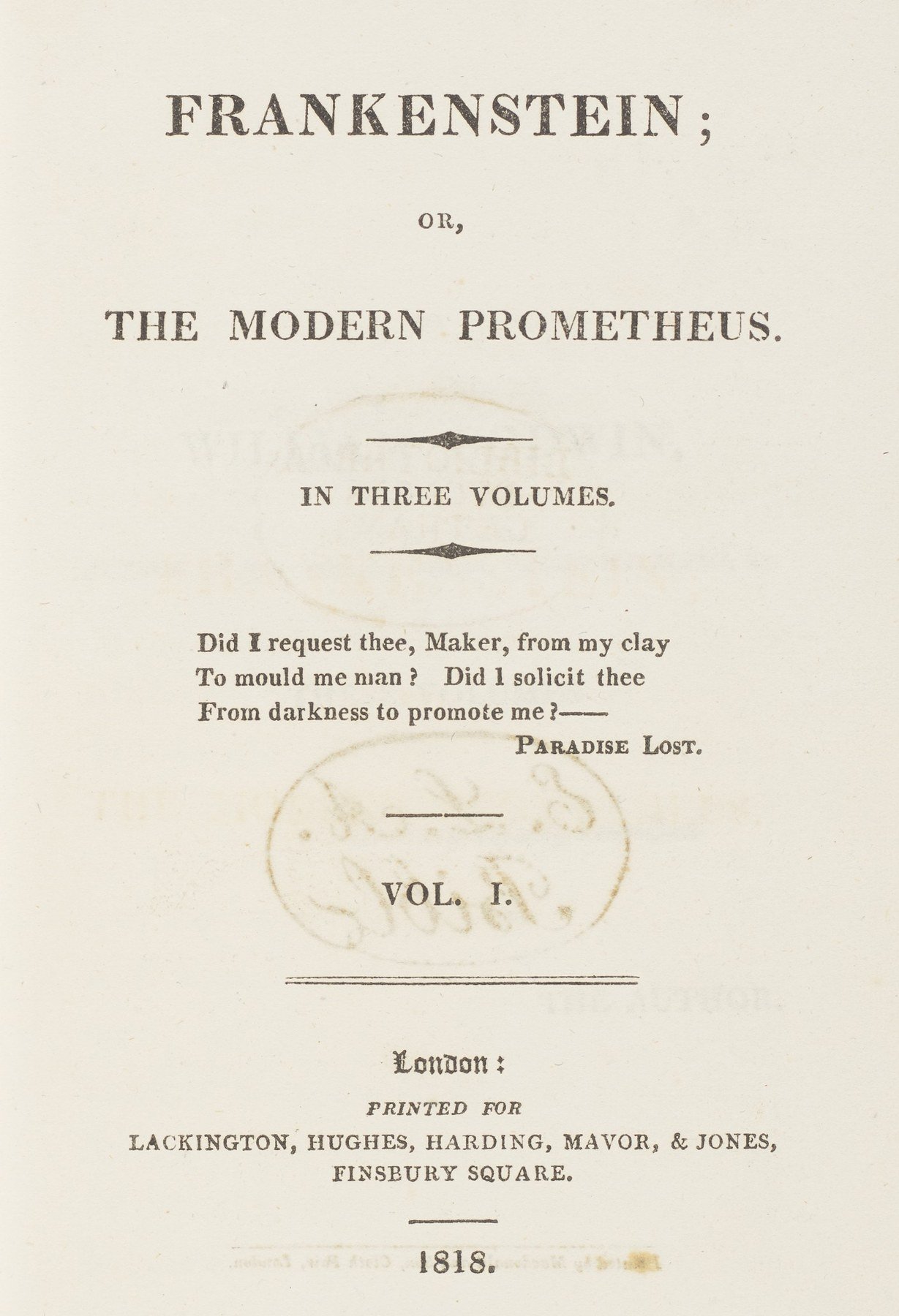
Frankenstein
Mary Shelley's Frankenstein is a gothic ancestor of steampunk, giving the field its first terrible lesson in science, ambition and responsibility.
Proto-Steampunk / Borderland Work
Frankenstein
Mary Shelley's Frankenstein is a gothic ancestor of steampunk, giving the field its first terrible lesson in science, ambition and responsibility.
 Core Steampunk
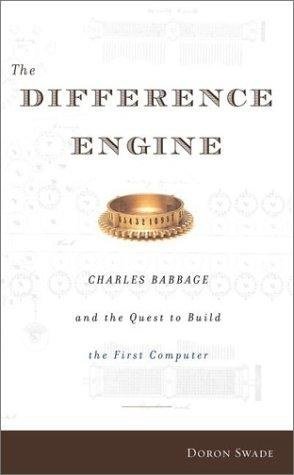
The Difference Engine
Gibson and Sterling's The Difference Engine is a core steampunk landmark, imagining a Babbage-powered Victorian information revolution.
Core Steampunk
The Difference Engine
Gibson and Sterling's The Difference Engine is a core steampunk landmark, imagining a Babbage-powered Victorian information revolution.
 Core Steampunk Fantasy
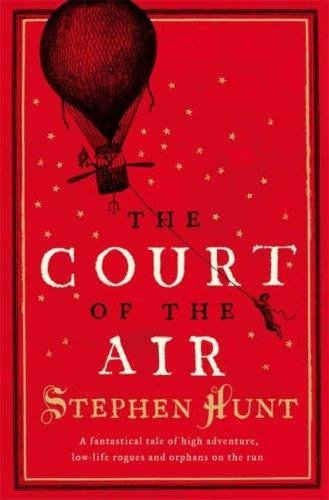
The Court of the Air
Stephen Hunt's The Court of the Air is core secondary-world steampunk fantasy, with airships, revolution and ancient powers.
Core Steampunk Fantasy
The Court of the Air
Stephen Hunt's The Court of the Air is core secondary-world steampunk fantasy, with airships, revolution and ancient powers.
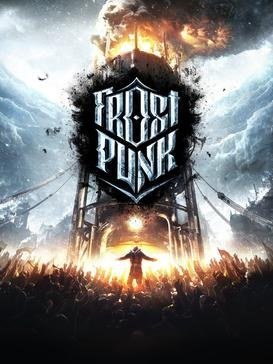 Core survival steampunk
Frostpunk
Frostpunk is 11 bit studios' survival steampunk city-builder of coal furnaces, frozen apocalypse, social ethics and desperate lawmaking.
Core survival steampunk
Frostpunk
Frostpunk is 11 bit studios' survival steampunk city-builder of coal furnaces, frozen apocalypse, social ethics and desperate lawmaking.