Who is Guy Gavriel Kay?
A Winnipeg law graduate whose apprenticeship was unique in the genre's history: at twenty, he was invited to Oxford to help Christopher Tolkien edit The Silmarillion. After the Fionavar Tapestry — high fantasy played at full Wagnerian pitch — Kay invented the form he has perfected ever since: history a quarter-turn from ours, with the names changed and one moon added (sometimes two), so that Moorish Spain, Tang China, Renaissance Italy and Justinian's Byzantium can be written with a novelist's freedom and a historian's grief. Tigana, his masterpiece for many, asks what happens when a conqueror erases a country's name from the world's memory. He writes a book every few years, each one polished like an heirloom, and his readership treats publication days as minor holidays.
Why they matter
The master of historical fantasy as its own serious form: Kay's quarter-turn method created a genre lane that everyone from Jacqueline Carey to Ken Liu has driven in, and Tigana remains the standard text on memory, empire and cultural erasure in fantasy.
Essential books — and where to start
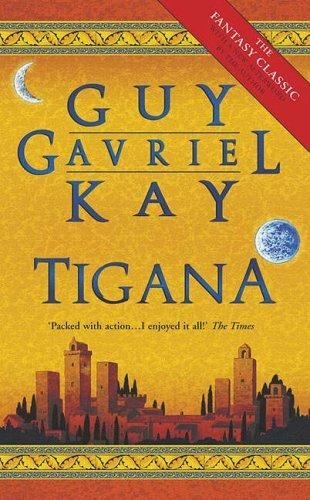
Tigana ★ start here
1990 · Fantasy · Historical Fantasy, Epic Fantasy
The Peninsula of the Palm — Renaissance Italy a quarter-turn fantastic — lies divided between two sorcerer-tyrants. Brandin of Ygrath, in grief for the son killed conquering it, has done something worse than burn the province of Tigana: he has unmade its name, by magic, so that no one born outside it can hear or remember the word. The survivors' conspiracy — a prince disguised as a musician, his band of patriots, and Dianora, who entered the tyrant's harem to kill him and committed the treason of falling in love — builds to a finale where every side's case is heard in full. Memory, identity and the price of both: the book Kay's reputation rests on.
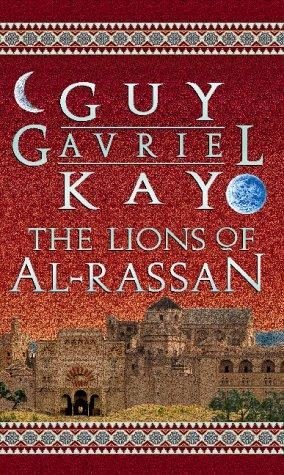
1995 · Fantasy · Historical Fantasy
Moorish Spain, renamed: Al-Rassan's caliphate has shattered into petty kingdoms, the Jaddite north is rising, and the Kindath (the book's Jews, moon-worshipping and twice-taxed) survive between. Kay arranges history's collision through three people who would, in a kinder world, have been allowed to keep each other: Rodrigo Belmonte, the northern captain (the Cid, quarter-turned); Ammar ibn Khairan, poet, diplomat and king-slayer of Al-Rassan; and Jehane, the Kindath physician who loves them both. The ending — two armies, two friends, one duel the narrative refuses to let the reader watch knowingly — is Kay's cruellest and finest trick. No magic to speak of; none needed.
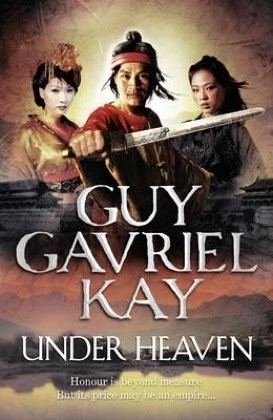
2010 · Fantasy · Historical Fantasy, Mythic Fantasy
Shen Tai has spent two years burying the dead of both empires at a haunted battlefield lake, to honour his general father; the ghosts cry at night, and he has learned to sleep through it. The princess of the western enemy answers the piety with a gift designed to be lethal: two hundred and fifty Sardian horses — 'heavenly horses', each worth a fortune, the whole herd worth a civil war — making Tai instantly one of the most consequential men in Kitai (Tang China, quarter-turned) on the eve of its An Lushan catastrophe. Kay orchestrates courtesans, poets, generals and one ferociously memorable Kanlin warrior toward history's avalanche, with his usual thesis: individuals matter, and are swept away regardless.
b. 1959 · British
Jonathan Strange & Mr Norrell is the most acclaimed fantasy debut of its century — the book that made footnotes glamorous and English magic a serious literary subject — and Piranesi's labyrinth has already joined the genre's permanent architecture.
b. 1959 · Canadian
The Malazan Book of the Fallen is epic fantasy's most ambitious completed structure — the genre's standing answer to the question of how big, how deep and how uncompromising the form can go and still find a mass readership.
1892–1973 · British
The founder of modern fantasy as a publishing category and a worldbuilding discipline: the maps, the appendices, the invented languages, the trilogy format and the entire epic-quest architecture descend from him.
