Lyonesse: Suldrun's Garden
The trilogy's later volumes took the World Fantasy Award (Madouc, 1990); its blend of folklore and statecraft visibly influenced Gaiman's Stardust and modern fairy-tale epic alike.

The essential authors of science fiction, fantasy & horror — and where to start reading them.
Book Entry · Fantasy
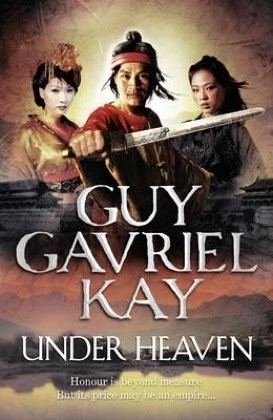
Shen Tai has spent two years burying the dead of both empires at a haunted battlefield lake, to honour his general father; the ghosts cry at night, and he has learned to sleep through it. The princess of the western enemy answers the piety with a gift designed to be lethal: two hundred and fifty Sardian horses — 'heavenly horses', each worth a fortune, the whole herd worth a civil war — making Tai instantly one of the most consequential men in Kitai (Tang China, quarter-turned) on the eve of its An Lushan catastrophe. Kay orchestrates courtesans, poets, generals and one ferociously memorable Kanlin warrior toward history's avalanche, with his usual thesis: individuals matter, and are swept away regardless.
The triumphant proof that Kay's method travelled beyond Europe — a bestseller and award-winner that helped open Anglophone fantasy's engagement with Chinese history and aesthetics.
Prefer Amazon? Buying through these links may earn SFcrowsnest a small commission, at no extra cost to you.
Buy on Amazon UK → Buy on Amazon US →As an Amazon Associate, SFcrowsnest earns from qualifying purchases.
The trilogy's later volumes took the World Fantasy Award (Madouc, 1990); its blend of folklore and statecraft visibly influenced Gaiman's Stardust and modern fairy-tale epic alike.
The definitive modern Arthuriad: source of Camelot the musical, an acknowledged wellspring for writers from Gaiman to Rowling, and one of fantasy's few genuine tragedies.
Locus Fantasy Award winner; with its sequels, the most rigorous use of amnesia as narrative engine in fantasy — Memento with hoplites, decades early.