Who is Susanna Clarke?
A Methodist minister's daughter and cookery-book editor who spent ten years writing her first novel in the evenings — and produced Jonathan Strange & Mr Norrell, eight hundred footnoted pages of Regency magic that arrived in 2004 as a finished cathedral, complete with its own invented scholarly literature. Chronic illness then removed her from publishing for most of two decades, until Piranesi (2020) — short where Strange is vast, and somehow equally complete — won the Women's Prize and confirmed that the first miracle had not been an accident. Two novels, one story collection, and a permanent seat at fantasy's high table: efficiency no one else has matched.
Why they matter
Jonathan Strange & Mr Norrell is the most acclaimed fantasy debut of its century — the book that made footnotes glamorous and English magic a serious literary subject — and Piranesi's labyrinth has already joined the genre's permanent architecture.
Essential books — and where to start
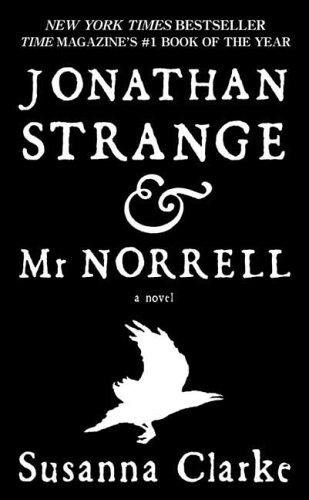
2004 · Fantasy · Historical Fantasy, Gaslamp Fantasy, Literary SF
England, 1806: magic is a respectable theoretical discipline that no one has practised in three hundred years — until the fussy, jealous Mr Norrell makes the statues of York Minster speak, raises a cabinet minister's fiancée from the dead (the terms of that bargain being the book's long fuse), and sets about making magic respectable by making it dull. His pupil Jonathan Strange — brilliant, careless, soon conjuring roads for Wellington in the Peninsula — prefers the older, wilder tradition of the Raven King, the magician-monarch of the North. Their quarrel, the gentleman with the thistle-down hair, and the footnotes (a complete invented scholarship, each one a sprung trap) compose the most convincing alternative England ever written.
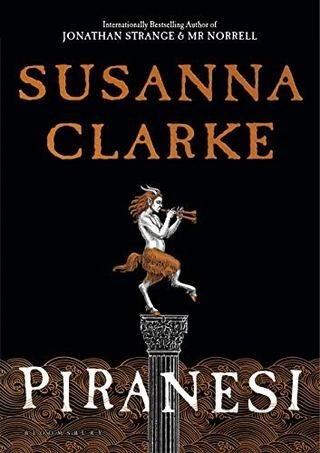
2020 · Fantasy · Portal Fantasy, Literary SF, Weird Fiction
The House is the world: infinite halls of statues, an ocean moving through the lower floors, clouds in the upper, thirteen dead and two living — the narrator, who keeps meticulous journals and calls himself the Beloved Child of the House, and 'the Other', a well-dressed man who visits twice a week to pursue the Great and Secret Knowledge and warns him against a dangerous intruder called 16. The journals' earlier volumes, in a handwriting he recognises, mention impossible things: Manchester, a university, a name. Clarke builds the reveal with watchmaker patience, and the book's miracle is its temperature — a story of imprisonment that reads as a hymn to wonder. The Beauty of the House is immeasurable; its Kindness infinite.
b. 1954 · Canadian
The master of historical fantasy as its own serious form: Kay's quarter-turn method created a genre lane that everyone from Jacqueline Carey to Ken Liu has driven in, and Tigana remains the standard text on memory, empire and cultural erasure in fantasy.
1906–1964 · British
The Once and Future King fixed the modern image of Arthur, Merlyn and Camelot, fed directly into Disney's Sword in the Stone and the musical Camelot, and taught later fantasists — Gaiman and Rowling included — that whimsy and tragedy belong in the same book.
1920–2012 · American
The writer who proved science fiction could be literature without apologising.
