The Curse of Chalion
Hugo and World Fantasy finalist (its sequel Paladin of Souls swept Hugo and Nebula); the modern benchmark for theological fantasy and the favourite Bujold of a sizeable faction.

The essential authors of science fiction, fantasy & horror — and where to start reading them.
Book Entry · Fantasy
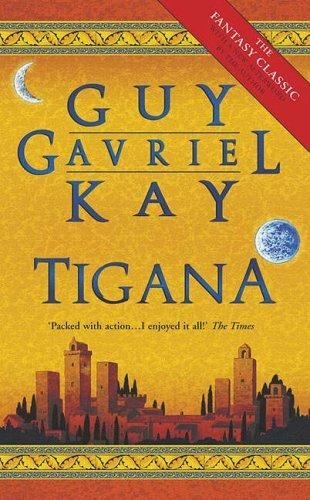
The Peninsula of the Palm — Renaissance Italy a quarter-turn fantastic — lies divided between two sorcerer-tyrants. Brandin of Ygrath, in grief for the son killed conquering it, has done something worse than burn the province of Tigana: he has unmade its name, by magic, so that no one born outside it can hear or remember the word. The survivors' conspiracy — a prince disguised as a musician, his band of patriots, and Dianora, who entered the tyrant's harem to kill him and committed the treason of falling in love — builds to a finale where every side's case is heard in full. Memory, identity and the price of both: the book Kay's reputation rests on.
World Fantasy finalist and a permanent top-ten fixture in fantasy polls: the genre's defining novel of cultural erasure, taught and cited well beyond it, and the proof of concept for Kay's history-adjacent method.
Prefer Amazon? Buying through these links may earn SFcrowsnest a small commission, at no extra cost to you.
Buy on Amazon UK → Buy on Amazon US →As an Amazon Associate, SFcrowsnest earns from qualifying purchases.
Hugo and World Fantasy finalist (its sequel Paladin of Souls swept Hugo and Nebula); the modern benchmark for theological fantasy and the favourite Bujold of a sizeable faction.
The Empire trilogy is routinely ranked among the finest political fantasy ever written — proof that the 'invaders' of Magician had the richer story, and a model for every court-intrigue fantasy since.
The trilogy's later volumes took the World Fantasy Award (Madouc, 1990); its blend of folklore and statecraft visibly influenced Gaiman's Stardust and modern fairy-tale epic alike.