Who was J. R. R. Tolkien?
Orphaned son of a Birmingham bank manager's family, Somme survivor, and Oxford's Rawlinson and Bosworth Professor of Anglo-Saxon — a philologist who invented languages for pleasure and then, needing speakers for them, invented Middle-earth. The Hobbit began as a line scribbled on a blank exam page ('In a hole in the ground there lived a hobbit'); its sequel took seventeen years and became The Lord of the Rings, the single most influential work of fantasy ever written and, by many countings, the most-read novel of the twentieth century. Behind both stood the Silmarillion legendarium, sixty years in the making and published only after his death by his son Christopher. He disliked allegory, adored trees, and answered his critics mostly by outselling civilisation.
Why they matter
The founder of modern fantasy as a publishing category and a worldbuilding discipline: the maps, the appendices, the invented languages, the trilogy format and the entire epic-quest architecture descend from him. The genre divides into Tolkien's heirs and Tolkien's rebels, and nobody gets to abstain.
Essential books — and where to start
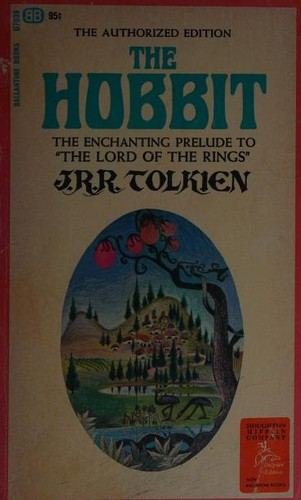
1937 · Middle-earth · Fantasy · Epic Fantasy, Children's & YA Fantasy, Portal Fantasy
Bilbo Baggins of Bag End, a hobbit of impeccable respectability, is ambushed over tea by thirteen dwarves and a wizard, and contracted — as burglar — for the recovery of the Lonely Mountain's treasure from the dragon Smaug. The road provides trolls, goblins, eagles, Beorn, Mirkwood's spiders and, in a dark lakeside cave, a riddle game with a creature called Gollum over a small gold ring whose significance its finder will spend decades not suspecting. Bilbo leaves home a grocer's notion of a person and returns a poet's: the prototype of fantasy's most durable arc. Written for Tolkien's children; conquered everyone else's.
1954 · Middle-earth · Fantasy · Epic Fantasy, Mythic Fantasy
The ring in Bilbo's pocket is the One Ring, and its maker is stirring. Tolkien's epic — one novel, published in three volumes in 1954–55 — sends Frodo Baggins and the Fellowship across a Middle-earth deep enough to fall into: Moria's drums in the deep, Lothlórien's grief, the breaking at Amon Hen, Rohan and Gondor at war, and the long crawl into Mordor where the quest succeeds by failing — mercy to Gollum, thrice spared, accomplishing what no will could. Beneath the adventure runs the sadness that powers it all: every victory purchases an ending, the Elves' tide goes out, and the Shire is saved, but not for Frodo. The appendices alone founded a discipline.
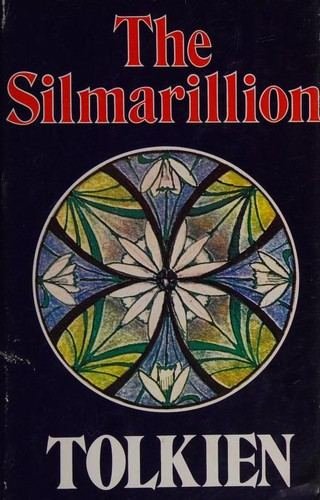
1977 · Middle-earth · Fantasy · Mythic Fantasy, Epic Fantasy
The matter of Middle-earth's First Age, sixty years in the writing and published four years after Tolkien's death, edited by his son Christopher: the creation of the world in music and the discord of Melkor; the Silmarils, three jewels holding the light of the dead Trees; Fëanor's terrible oath and the Elves' long defeat in Beleriand; Beren and Lúthien (the names on Tolkien's and Edith's own gravestones); Túrin's Kalevala-dark ruin; and the drowning of Númenor. Not a novel but a mythology — biblical in cadence, remorseless in cumulative power — and the bedrock under everything else he wrote.
Series
1931–2009 · American
The gateway epic fantasist for a generation of 1980s–90s readers: the Belgariad's chatty, character-first formula taught millions that doorstop fantasy could be comfort reading, and its fingerprints are on every found-family quest since.
b. 1959 · Canadian
The Malazan Book of the Fallen is epic fantasy's most ambitious completed structure — the genre's standing answer to the question of how big, how deep and how uncompromising the form can go and still find a mass readership.
b. 1960 · British
The defining mythic fantasist of his generation: Sandman legitimised comics as literature, American Gods codified the gods-among-us novel, and his fairy-tale register shaped two decades of fantasy, YA and screen storytelling.
