Alone with the Horrors
Winner of both the World Fantasy Award and the Bram Stoker Award for collection: the canonical one-volume Campbell and a standard text in any serious horror education.

The essential authors of science fiction, fantasy & horror — and where to start reading them.
Book Entry · Horror
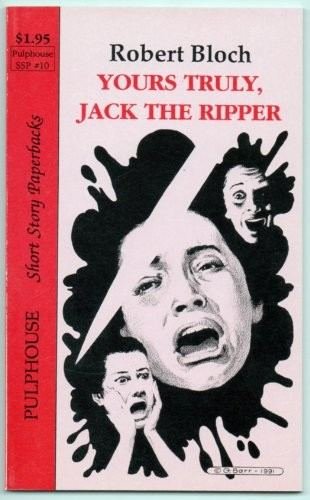
A short story with a long shadow: Sir Guy Hollis of the British Embassy arrives in wartime Chicago with a theory — the Ripper never died, his murders being ritual sacrifices that purchase eternal youth, and the trail of unsolved slayings has crossed the Atlantic. He recruits a sceptical psychiatrist for a tour of the city's bohemian undergrounds, hunting a man who could look like anyone, which is of course the trap: the final line is one of the genre's most cleanly sprung. Bloch's Ripper obsession (he returned to it across his career, including a Star Trek script) effectively founded the Ripper-as-occult-immortal industry.
The story that made the Ripper a permanent supernatural property — its descendants run from Harlan Ellison's anthology sequel to a thousand screen variations — and early evidence of Bloch's pivot from cosmic to human monsters.
Prefer Amazon? Buying through these links may earn SFcrowsnest a small commission, at no extra cost to you.
Buy on Amazon UK → Buy on Amazon US →As an Amazon Associate, SFcrowsnest earns from qualifying purchases.
Winner of both the World Fantasy Award and the Bram Stoker Award for collection: the canonical one-volume Campbell and a standard text in any serious horror education.
The debut that launched horror's biggest career and, via De Palma's 1976 film, a permanent cultural archetype: the bullied girl as apocalypse.
The book where British horror's modern voice — municipal, paranoid, precisely seedy — first sounded at novel length; the foundation of Campbell's six-decade dominance of the field's literary wing.