Who was Robert Bloch?
The youngest of Lovecraft's protégés — they corresponded from Bloch's teens, and HPL affectionately killed a Bloch stand-in in 'The Haunter of the Dark', a favour Bloch had already returned — who then executed the genre's great pivot: from cosmic monsters to the one behind the human face. His crime-horror of the 1940s and 50s ('Yours Truly, Jack the Ripper', The Scarf) culminated in Psycho, whose mild motel proprietor Norman Bates, filtered through Hitchcock, became the twentieth century's defining psychopath. A Milwaukee advertising man with a legendary store of puns ('the heart of a small boy — I keep it in a jar on my desk'), he wrote prolifically for film and television and won the Hugo for 'That Hell-Bound Train', a deal-with-the-devil story of perfect construction.
Why they matter
The hinge between Lovecraft's cosmic age and the psychological thriller: Psycho founded the serial-killer genre, and Bloch's insight — that the scariest monster is the neighbour — became modern horror's operating premise.
Essential books — and where to start
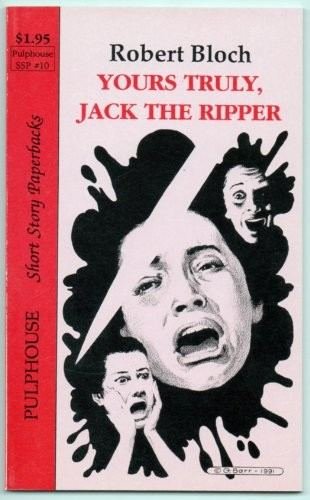
1943 · Horror · Psychological Horror, Supernatural Horror, Weird Fiction
A short story with a long shadow: Sir Guy Hollis of the British Embassy arrives in wartime Chicago with a theory — the Ripper never died, his murders being ritual sacrifices that purchase eternal youth, and the trail of unsolved slayings has crossed the Atlantic. He recruits a sceptical psychiatrist for a tour of the city's bohemian undergrounds, hunting a man who could look like anyone, which is of course the trap: the final line is one of the genre's most cleanly sprung. Bloch's Ripper obsession (he returned to it across his career, including a Star Trek script) effectively founded the Ripper-as-occult-immortal industry.
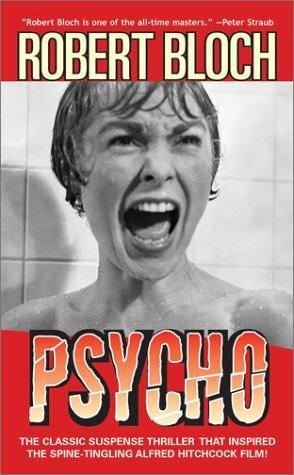
1959 · Horror · Psychological Horror
Mary Crane steals forty thousand dollars, drives until the rain stops her, and checks into a twelve-cabin motel bypassed by the new highway, run by a plump, apologetic hobbyist named Norman Bates who lives with his mother in the house on the hill. Bloch — writing from Wisconsin with the Ed Gein case in the local papers — keeps the viewpoint domestic and the monstrousness bookkeeping-ordinary: Norman's chapters are a masterclass in sympathetic wrongness, and the shower murder arrives mid-book with a single sentence's brutality. Hitchcock bought the rights anonymously for $9,500 and famously tried to buy up the print run to protect the twist.
b. 1946 · British
The bridge between Lovecraft's tradition and modern British unease, and the field's standard for sustained literary quality: multiple Grand Master and lifetime honours from every body that issues them, and an influence on literate horror that compounds by the decade.
1869–1951 · British
The supreme master of nature-horror and a direct ancestor of cosmic horror: Blackwood demonstrated that the most profound terror comes from indifference and immensity, not fangs.
1890–1937 · American
The defining figure of twentieth-century horror.
