The Doll Who Ate His Mother
The book where British horror's modern voice — municipal, paranoid, precisely seedy — first sounded at novel length; the foundation of Campbell's six-decade dominance of the field's literary wing.

The essential authors of science fiction, fantasy & horror — and where to start reading them.
Book Entry · Horror
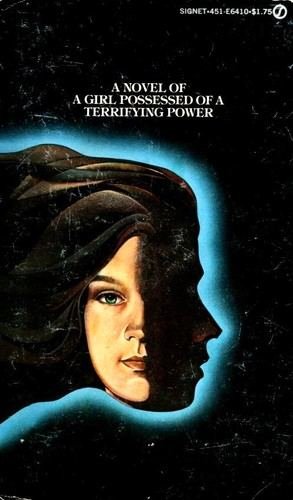
Carrie White, sixteen, has her first period in the school showers and is pelted with tampons by classmates chanting 'plug it up' — the opening humiliation that wakes her telekinesis and sets the fuse on prom night. King assembles the catastrophe as found documentary: committee reports, memoirs, AP wires and the novel's present tense interleaved, so the reader always knows the gymnasium burns and reads on anyway. Margaret White's scripture-warped mothering supplies the domestic horror that outclasses the supernatural one. Written in a trailer laundry room, rescued from the bin by Tabitha King, sold for a $400,000 paperback advance: the genre's foundation legend.
The debut that launched horror's biggest career and, via De Palma's 1976 film, a permanent cultural archetype: the bullied girl as apocalypse. The epistolary-collage structure remains King's most formally experimental book.
Prefer Amazon? Buying through these links may earn SFcrowsnest a small commission, at no extra cost to you.
Buy on Amazon UK → Buy on Amazon US →As an Amazon Associate, SFcrowsnest earns from qualifying purchases.
The book where British horror's modern voice — municipal, paranoid, precisely seedy — first sounded at novel length; the foundation of Campbell's six-decade dominance of the field's literary wing.
The book that, with King's early run, defined the late-70s horror boom's upper register — King has called it one of the finest horror novels of the century — and the modern model for the guilt-returns ghost narrative; filmed, reductively, in 1981.
The story that made the Ripper a permanent supernatural property — its descendants run from Harlan Ellison's anthology sequel to a thousand screen variations — and early evidence of Bloch's pivot from cosmic to human monsters.