Author Profile · Science Fiction & Fantasy
Ursula K. Le Guin
1929–2018 · American
Who was Ursula K. Le Guin?
Daughter of the anthropologist Alfred Kroeber and the writer Theodora Kroeber, Le Guin inherited the family discipline and turned it on invented worlds: her Hainish novels are field studies of possible humanities, her Earthsea a fully imagined archipelago where magic is grammar and death has a dry-stone wall. The Left Hand of Darkness asked what remains of gender when biology stops enforcing it; The Dispossessed put a working anarchist society on the scales against capitalism and weighed both honestly. She wrote essays that became the field's conscience, translated the Tao Te Ching, and told the National Book Awards audience in 2014 that hard times were coming when we'd want the voices of writers who could remember freedom. Nobody doubted whom she meant.
Why they matter
The genre's most honoured writer and its moral centre of gravity: the standard demonstration that SF and fantasy can do everything literature does, plus things only they can. Earthsea and the Hainish books are canonical in both senses of the word.
Essential books — and where to start
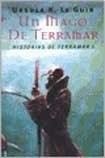
1968 · Earthsea, book 1 · Fantasy · Epic Fantasy, Children's & YA Fantasy, Mythic Fantasy
Ged, a goatherd of Gont with raw power and rawer pride, is goaded at the wizards' school on Roke into a forbidden summoning that tears a hole in the world and releases a shadow with no name but his. The cure for the genre's every power fantasy follows: not the defeat of a dark lord, but a hunt across the archipelago that reverses, in the end, into pursuit of the thing he must name as himself. Magic here is the true speech of things, and using it is an act of ecological responsibility. Spare, archaic-plain prose; a brown-skinned hero the cover artists spent decades refusing to depict.
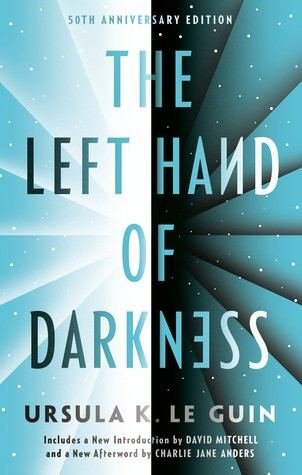
1969 · The Hainish Cycle · Science Fiction · Anthropological SF, Feminist SF, Social SF
Genly Ai, lone envoy of the Ekumen, comes to the glacial world of Gethen to invite its nations into the human community — and spends the novel failing to read a people who are neither men nor women, but ambisexual beings who become either, unpredictably, for a few days each month. Politics exiles him from one kingdom to the labour camps of another; the rescue, and the eighty-day crossing of the Gobrin ice with the disgraced minister Estraven, turns first contact into one of literature's great studies of trust. 'The king was pregnant' remains the genre's most quietly revolutionary sentence.
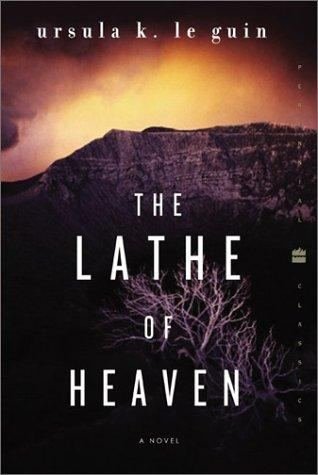
1971 · Science Fiction · Dystopia, Social SF, Literary SF
George Orr's dreams come true: not figuratively, but retroactively, rewriting reality so that only he remembers the world before. Terrified, he drugs himself into dreamlessness — until court-ordered therapy delivers him to Dr William Haber, who sees in George's gift a lever for fixing the world. Each benevolent instruction misfires with a djinn's literal-mindedness: end overpopulation (plague), end racism (universal grey), achieve world peace (alien invasion of the Moon). Le Guin's Taoist parable of doing-by-not-doing is also her sharpest book about the engineer's itch to improve people without their consent.
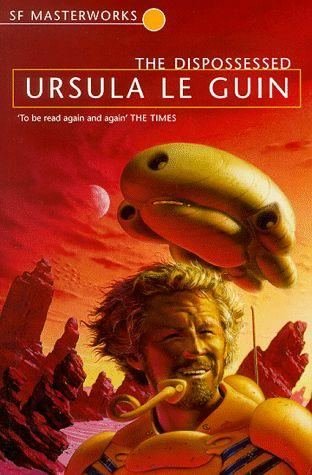
1974 · The Hainish Cycle · Science Fiction · Social SF, Anthropological SF, Literary SF
Physicist Shevek leaves Anarres — the anarchist moon settled by exiles a hundred and seventy years before — for the lush capitalist mother-world Urras, carrying a theory of time that will make ansible-instant communication possible, and the heresy that even an anarchy can calcify into conformism. Le Guin alternates the two worlds chapter by chapter, structuring the book like Shevek's physics, and subtitles it 'an ambiguous utopia' with scrupulous honesty: Anarres is dusty, hungry, magnificent and flawed, and the novel weighs it against abundance-with-masters without cheating either side.
Series
b. 1949 · American
Among the most awarded novelists in the field's history and the writer who proved space opera could be character-driven comedy of manners without losing its nerve.
b. 1951 · American
Ender's Game is one of the most widely read SF novels ever published — a recruiting text for the genre itself, taught in schools and military academies alike — and its sequel's compassionate alien-understanding remains a benchmark for first-contact ethics.
b. 1972 · American
The defining SFF writer of the 2010s: the unprecedented Hugo three-peat marked the genre's centre of gravity shifting — formally, demographically and thematically — and the Broken Earth is already canon, taught from secondary schools to doctoral seminars.
