The Dispossessed
Hugo, Nebula and Locus winner; the standard against which all political SF is measured, taught in politics departments as readily as literature ones.

The essential authors of science fiction, fantasy & horror — and where to start reading them.
Book Entry · Science Fiction
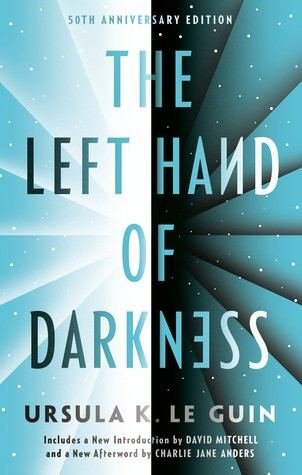
by Ursula K. Le Guin · 1969 · The Hainish Cycle
Genly Ai, lone envoy of the Ekumen, comes to the glacial world of Gethen to invite its nations into the human community — and spends the novel failing to read a people who are neither men nor women, but ambisexual beings who become either, unpredictably, for a few days each month. Politics exiles him from one kingdom to the labour camps of another; the rescue, and the eighty-day crossing of the Gobrin ice with the disgraced minister Estraven, turns first contact into one of literature's great studies of trust. 'The king was pregnant' remains the genre's most quietly revolutionary sentence.
Hugo and Nebula winner, the founding masterpiece of feminist SF, and a permanent fixture at the top of all-time lists. Its thought-experiment method defined anthropological SF.
Le Guin's loose future history of worlds seeded by ancient Hain, visited one by one by envoys of the Ekumen — anthropological SF's defining sequence.
In the Guide from The Hainish Cycle:
Prefer Amazon? Buying through these links may earn SFcrowsnest a small commission, at no extra cost to you.
Buy on Amazon UK → Buy on Amazon US →As an Amazon Associate, SFcrowsnest earns from qualifying purchases.
Hugo, Nebula and Locus winner; the standard against which all political SF is measured, taught in politics departments as readily as literature ones.
Hugo winner (1989) and a regular pick for the best SF novel about cloning ever written; its psychogenesis arguments anticipate decades of behavioural-genetics debate.
A cult classic of robot-love SF decades ahead of the AI-companion debate, posing the are-his-feelings-real question with more nerve than most philosophy papers.