The City & the City
Hugo (tied), World Fantasy, Clarke and BSFA winner — a near-sweep — and the book that carried Miéville furthest into the literary mainstream; its 'unseeing' entered critical vocabulary as shorthand for trained urban blindness.

The essential authors of science fiction, fantasy & horror — and where to start reading them.
Book Entry · Science Fiction
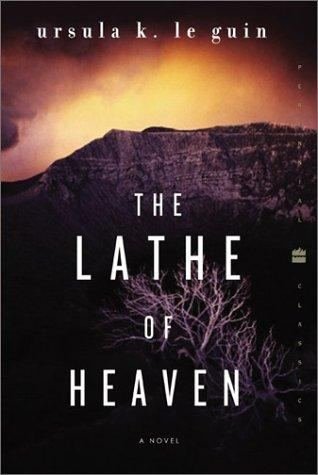
George Orr's dreams come true: not figuratively, but retroactively, rewriting reality so that only he remembers the world before. Terrified, he drugs himself into dreamlessness — until court-ordered therapy delivers him to Dr William Haber, who sees in George's gift a lever for fixing the world. Each benevolent instruction misfires with a djinn's literal-mindedness: end overpopulation (plague), end racism (universal grey), achieve world peace (alien invasion of the Moon). Le Guin's Taoist parable of doing-by-not-doing is also her sharpest book about the engineer's itch to improve people without their consent.
Locus Award winner, twice filmed for television, and her tribute-in-kind to Philip K. Dick — reality-slippage handled with a serenity Dick never wanted.
Prefer Amazon? Buying through these links may earn SFcrowsnest a small commission, at no extra cost to you.
Buy on Amazon UK → Buy on Amazon US →As an Amazon Associate, SFcrowsnest earns from qualifying purchases.
Hugo (tied), World Fantasy, Clarke and BSFA winner — a near-sweep — and the book that carried Miéville furthest into the literary mainstream; its 'unseeing' entered critical vocabulary as shorthand for trained urban blindness.
The genre's most famous avant-garde novel and an enduring proof that SF readers will follow real difficulty if the sentences earn it.
The standard exhibit for science fiction as literary character study — a Nebula and Hugo finalist regularly taught beside Roth and Bellow, whose territory it raids.