The Amber Spyglass
Whitbread Book of the Year 2001 — the first children's book ever to take the overall prize — and the most theologically audacious bestseller in the YA canon; the trilogy's capstone and lightning rod alike.

The essential authors of science fiction, fantasy & horror — and where to start reading them.
Book Entry · Fantasy
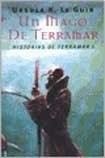
by Ursula K. Le Guin · 1968 · Earthsea, book 1
Ged, a goatherd of Gont with raw power and rawer pride, is goaded at the wizards' school on Roke into a forbidden summoning that tears a hole in the world and releases a shadow with no name but his. The cure for the genre's every power fantasy follows: not the defeat of a dark lord, but a hunt across the archipelago that reverses, in the end, into pursuit of the thing he must name as himself. Magic here is the true speech of things, and using it is an act of ecological responsibility. Spare, archaic-plain prose; a brown-skinned hero the cover artists spent decades refusing to depict.
One of fantasy's foundational texts: the wizard-school template Rowling inherited, the equilibrium-based magic system half the genre uses, and a Jungian moral architecture that still distinguishes it from its imitators.
Le Guin's archipelago of wizards, dragons and true names, where magic is language and balance is everything — six books that grow up alongside their readers.
In the Guide from Earthsea:
Prefer Amazon? Buying through these links may earn SFcrowsnest a small commission, at no extra cost to you.
Buy on Amazon UK → Buy on Amazon US →As an Amazon Associate, SFcrowsnest earns from qualifying purchases.
Whitbread Book of the Year 2001 — the first children's book ever to take the overall prize — and the most theologically audacious bestseller in the YA canon; the trilogy's capstone and lightning rod alike.
The founding text of revisionist epic fantasy: George R.
A cult masterpiece of mythic YA — the standard against which Tam Lin retellings are measured — and the Jones novel writers (Gaiman included) most often name when asked what the form can do.