Who was T. H. White?
A troubled schoolmaster who retreated to a gamekeeper's cottage with a goshawk and the Morte d'Arthur, and emerged with the twentieth century's most humane retelling of the Matter of Britain. White's Arthur cycle begins as comedy — the Wart tutored by a time-reversed Merlyn who turns him into fish, ant and goose to learn what power is for — and darkens, book by book, into a meditation on war, law and the doomed attempt to harness Might to Right, written by a pacifist watching Europe burn. His Lancelot, ugly and self-loathing and gifted, is among fantasy's finest characters.
Why they matter
The Once and Future King fixed the modern image of Arthur, Merlyn and Camelot, fed directly into Disney's Sword in the Stone and the musical Camelot, and taught later fantasists — Gaiman and Rowling included — that whimsy and tragedy belong in the same book.
Essential books — and where to start
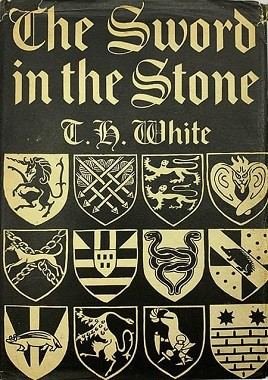
1938 · The Once and Future King, book 1 · Fantasy · Mythic Fantasy, Children's & YA Fantasy, Comic Fantasy
The Wart — orphan, page, and future King Arthur, though nobody knows it — is educated by Merlyn, a wizard living backwards through time with a talking owl and a tendency to anachronism. The lessons are transformations: as perch, merlin, ant, wild goose and badger, the boy learns successive answers to the question of how power should live with strength. Around the lessons romp questing beasts, jousting send-ups and Robin Wood (not Hood, he's particular). The standalone 1938 text is gentler and stranger than the revised version White later folded into the tetralogy.
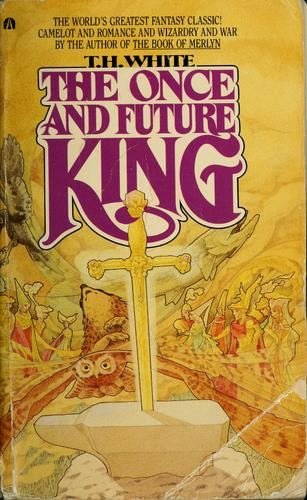
1958 · The Once and Future King · Fantasy · Mythic Fantasy, Historical Fantasy
The complete tetralogy: The Sword in the Stone's comedy, The Queen of Air and Darkness's poisoned Orkney nursery, The Ill-Made Knight's anatomy of Lancelot — ugly, devout, self-hating, the best knight alive — and The Candle in the Wind's long twilight, as the law Arthur built to cage Might is used to destroy everyone he loves. White retells Malory as psychological novel and anti-war argument at once, with Mordred as fascism in miniature and the old king sending young Tom of Newbold Revell out from the doomed camp to keep the story alive.
Series
b. 1959 · British
Jonathan Strange & Mr Norrell is the most acclaimed fantasy debut of its century — the book that made footnotes glamorous and English magic a serious literary subject — and Piranesi's labyrinth has already joined the genre's permanent architecture.
b. 1960 · British
The defining mythic fantasist of his generation: Sandman legitimised comics as literature, American Gods codified the gods-among-us novel, and his fairy-tale register shaped two decades of fantasy, YA and screen storytelling.
b. 1954 · Canadian
The master of historical fantasy as its own serious form: Kay's quarter-turn method created a genre lane that everyone from Jacqueline Carey to Ken Liu has driven in, and Tigana remains the standard text on memory, empire and cultural erasure in fantasy.
