The Sword in the Stone
The twentieth century's most beloved Arthurian opening, source of Disney's 1963 film, and the template for the 'magical education' subgenre that Rowling industrialised.

The essential authors of science fiction, fantasy & horror — and where to start reading them.
Book Entry · Fantasy
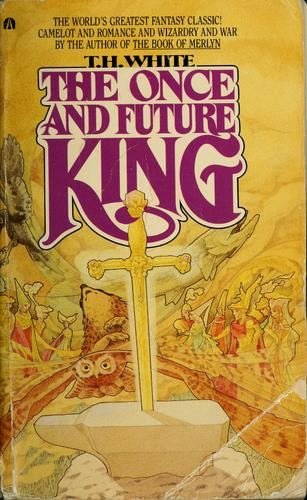
by T. H. White · 1958 · The Once and Future King
The complete tetralogy: The Sword in the Stone's comedy, The Queen of Air and Darkness's poisoned Orkney nursery, The Ill-Made Knight's anatomy of Lancelot — ugly, devout, self-hating, the best knight alive — and The Candle in the Wind's long twilight, as the law Arthur built to cage Might is used to destroy everyone he loves. White retells Malory as psychological novel and anti-war argument at once, with Mordred as fascism in miniature and the old king sending young Tom of Newbold Revell out from the doomed camp to keep the story alive.
The definitive modern Arthuriad: source of Camelot the musical, an acknowledged wellspring for writers from Gaiman to Rowling, and one of fantasy's few genuine tragedies.
White's Arthurian cycle, from the Wart's enchanted education to the ruin of the Round Table — comedy ripening into tragedy.
In the Guide from The Once and Future King:
Prefer Amazon? Buying through these links may earn SFcrowsnest a small commission, at no extra cost to you.
Buy on Amazon UK → Buy on Amazon US →As an Amazon Associate, SFcrowsnest earns from qualifying purchases.
The twentieth century's most beloved Arthurian opening, source of Disney's 1963 film, and the template for the 'magical education' subgenre that Rowling industrialised.
The trilogy's later volumes took the World Fantasy Award (Madouc, 1990); its blend of folklore and statecraft visibly influenced Gaiman's Stardust and modern fairy-tale epic alike.
Locus Fantasy Award winner; with its sequels, the most rigorous use of amnesia as narrative engine in fantasy — Memento with hoplites, decades early.