Who was Mervyn Peake?
Painter, illustrator (his Alice and Treasure Island remain definitive for many), war artist among the first into Belsen, poet, and author of the Gormenghast books — fantasy's great gothic cathedral, built from language instead of stone. Peake's castle-state of Gormenghast is a world entire: a mountain of masonry governed by ritual so ancient nobody remembers its purpose, populated by grotesques drawn with a caricaturist's eye and a poet's sympathy, and menaced from within by Steerpike, the kitchen boy whose ambition is the book's serpent. Parkinson's disease ended his career cruelly early, leaving Titus's story unfinished.
Why they matter
The proof that fantasy needs neither magic nor maps to be vast. Gormenghast stands with Tolkien as the other great pillar of modern fantasy — the inward, gothic, painterly tradition — and its influence runs through Moorcock, M. John Harrison and Miéville, who have all said so loudly.
Essential books — and where to start
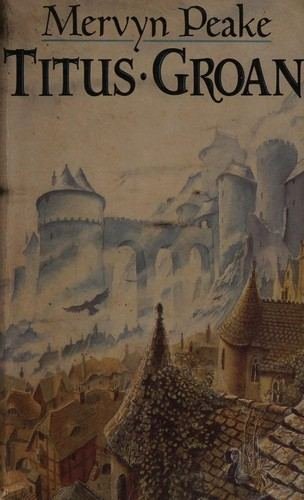
1946 · Gormenghast, book 1 · Fantasy · Gothic Horror, Literary SF
An heir is born to the House of Groan, and the castle of Gormenghast — miles of masonry, ivy-choked courts, libraries, kitchens and roofscapes — grinds through its immemorial rituals around him. The infant Titus barely appears; the book belongs to the castle's grotesques (melancholy Lord Sepulchrave, the marmoreal Countess with her cats and birds, Fuchsia in her attic, Swelter and Flay circling towards their cleaver-and-sword duel) and above all to Steerpike, the kitchen boy climbing out of the fat-reek towards power with a razor's charm. The prose is paint: nobody has ever written rooms, light or faces like Peake.
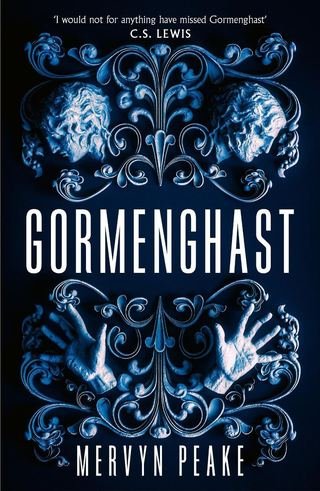
1950 · Gormenghast, book 2 · Fantasy · Gothic Horror, Literary SF
Titus grows from seven to seventeen inside the ritual machine he is doomed to operate, while Steerpike ascends — by arson, murder and the seduction of the Master of Ritual's office — towards the castle's controlling heart. Peake adds the schoolboy comedy of the professors, the tragedy of the lovelorn Irma Prunesquallor's soirée, and the great flood that turns Gormenghast into a vertical archipelago for the final hunt. Titus's killing of Steerpike and his renunciation of the castle — 'I am leaving' — is fantasy's most resonant act of walking away.
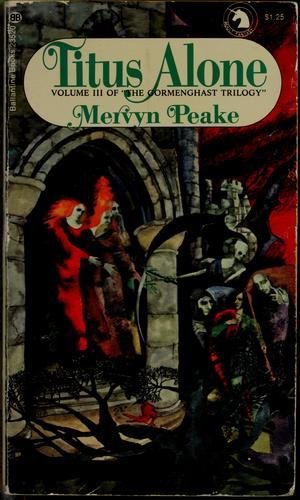
1959 · Gormenghast, book 3 · Fantasy · Literary SF, New Wave SF
Titus rides out of Gormenghast into a world that has never heard of it — a glittering, surveillance-haunted modernity of factories, flying spy-globes and the death-camp shadows Peake had seen at Belsen, where his castle credentials read as madness. Befriended by the magnificent Muzzlehatch and the besotted Juno, hunted by the police of an antiseptic state, Titus doubts his own past until Gormenghast's reality is confirmed — at which point, in the book's perfect last gesture, he turns away from it again. Assembled from drafts as Parkinson's closed in; the 1970 restored text is the one to read.
Series
1920–2012 · American
The writer who proved science fiction could be literature without apologising.
1947–2015 · British
The great sensualist of fantasy and a key architect of its dark, eroticised register — the bridge between Moorcock's generation and modern dark fantasy and paranormal fiction.
1931–2019 · American
The genre's most acclaimed pure writer: the standard demonstration that SF can sustain — and reward — the closest reading literature allows.
