Titus Groan
One of the founding masterpieces of modern fantasy, establishing its entire gothic-literary wing; the 2000 BBC adaptation introduced Steerpike to a new generation.

The essential authors of science fiction, fantasy & horror — and where to start reading them.
Book Entry · Fantasy
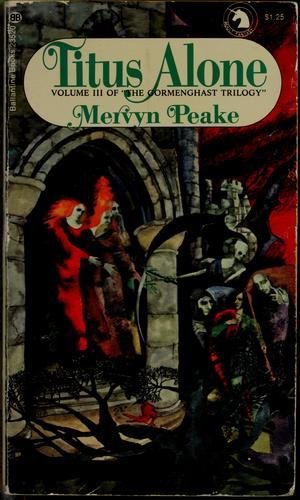
Titus rides out of Gormenghast into a world that has never heard of it — a glittering, surveillance-haunted modernity of factories, flying spy-globes and the death-camp shadows Peake had seen at Belsen, where his castle credentials read as madness. Befriended by the magnificent Muzzlehatch and the besotted Juno, hunted by the police of an antiseptic state, Titus doubts his own past until Gormenghast's reality is confirmed — at which point, in the book's perfect last gesture, he turns away from it again. Assembled from drafts as Parkinson's closed in; the 1970 restored text is the one to read.
A flawed, haunting coda whose proto-New-Wave collision of fantasy and dystopia influenced Moorcock (who championed it) and M. John Harrison profoundly.
Peake's gothic masterwork: the immense castle-state of Gormenghast, its ritual-bound earls, and Titus, the heir who wants out.
In the Guide from Gormenghast:
Prefer Amazon? Buying through these links may earn SFcrowsnest a small commission, at no extra cost to you.
Buy on Amazon UK → Buy on Amazon US →As an Amazon Associate, SFcrowsnest earns from qualifying purchases.
One of the founding masterpieces of modern fantasy, establishing its entire gothic-literary wing; the 2000 BBC adaptation introduced Steerpike to a new generation.
Nebula winner and the New Wave's most notorious provocation: time-travel paradox as theology, handled with a seriousness that outlasted the scandal.
The most extreme and most influential of Ballard's urban-disaster novels; Cronenberg's 1996 film adaptation won a special jury prize at Cannes and a moral panic in the British press.