Author Profile · Science Fiction & Fantasy
Gene Wolfe
1931–2019 · American
Who was Gene Wolfe?
A Korean War veteran and industrial engineer — he helped develop the machine that cooks Pringles, a fact no profile has ever resisted — who wrote, on the evidence, the most densely layered prose the genre owns. Wolfe's trademark is the unreliable narrator deployed with engineering precision: torturers with perfect memories who still lie, amnesiacs, copies who don't know it, every text an artefact with an agenda. The Book of the New Sun, his four-volume masterpiece, yields a different novel on each rereading, which is the point. Catholic, courteous and sphinx-like in interviews, he was called by Le Guin 'our Melville' — and the field has never demoted him.
Why they matter
The genre's most acclaimed pure writer: the standard demonstration that SF can sustain — and reward — the closest reading literature allows. The New Sun stands on most shortlists for the greatest SF work ever, and his influence on literary fantasy (Gaiman, Miéville, half of Tor's backlist) is pervasive.
Essential books — and where to start
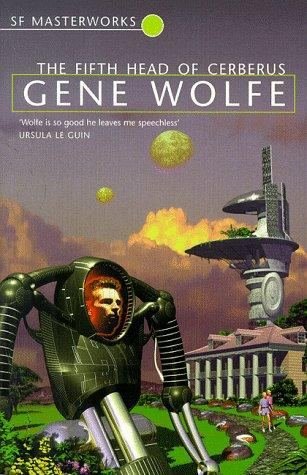
1972 · Science Fiction · Anthropological SF, Literary SF
Three novellas, one planet-pair, every certainty optional. On Sainte Croix, a boy in a brothel-mansion discovers why his father's experiments concern him so intimately; in the second panel, an anthropologist's romance of the shapeshifting aborigines of Sainte Anne may be myth, memoir or camouflage; in the third, an officer shuffles the prison file of a man who may be that anthropologist, his son, or one of the aborigines who — if they ever existed — could imitate humans perfectly. The colonial question (did the settlers exterminate the natives, or become them?) is also the book's method: identity as an unreliable document.
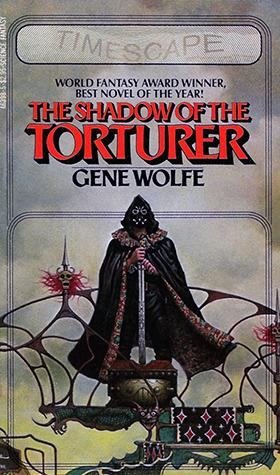
1980 · The Book of the New Sun, book 1 · Science Fiction · Science Fantasy, Dark Fantasy, Literary SF
Severian, apprentice of the Order of the Seekers for Truth and Penitence — the torturers' guild of a Urth so ancient the sun is dying and our era survives as misremembered myth — shows mercy to a single client, and is exiled to a provincial post carrying the executioner's sword Terminus Est. He claims to remember everything perfectly; the attentive reader learns what that claim is worth. Around his procession out of the cliff-deep city of Nessus, Wolfe builds the genre's richest text: every word (fuligin, destrier, alzabo) real but archaic, every digression load-bearing, the far future rendered in the language of the deep past.
1986 · Fantasy · Historical Fantasy, Mythic Fantasy
Latro, a mercenary wounded at the head in 479 BC, forgets each day by the next morning — and, in compensation, sees and converses with the gods, ghosts and nymphs of Greece, who are everywhere and rather pleased to be noticed. His scroll, written each evening to instruct his next self, is the novel: a first-person narrative by a man meeting his friends for the first time daily, blessed and cursed in a single stroke, walking through the Persian Wars unable to retain that he may have offended the Earth Mother herself. The inverse of Severian's perfect memory, and every bit as treacherous a document.
Series
1920–2012 · American
The writer who proved science fiction could be literature without apologising.
b. 1935 · American
The field's great professional, whose 1970s novels proved commercial SF writers could retool into literary ones.
1911–1968 · British
The proof that fantasy needs neither magic nor maps to be vast.
