Author Profile · Science Fiction
Liu Cixin
b. 1963 · Chinese
Who is Liu Cixin?
A power-plant computer engineer from Shanxi who wrote in the evenings and became the first Asian author to win the Hugo for Best Novel — and, in the process, the public face of Chinese science fiction's global arrival. The Three-Body trilogy (properly Remembrance of Earth's Past) begins in the Cultural Revolution and ends at the death of the universe, en route delivering the Dark Forest answer to the Fermi paradox: the stars are silent because everyone sensible is hiding. Liu's characters serve his ideas, as he cheerfully concedes; the ideas, meanwhile, are the biggest the field has seen since Stapledon — dimensional strikes, sophons, civilisations as game theory played with extinction stakes.
Why they matter
The writer who made science fiction a global, multipolar conversation: Three-Body conquered Anglophone publishing, Barack Obama's reading list and Netflix, and the Dark Forest hypothesis entered scientific and strategic discourse as a genuine contribution.
Essential books — and where to start
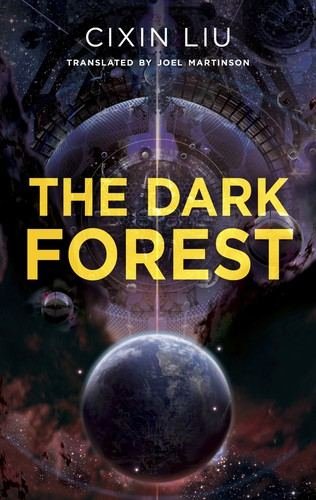
2008 · Remembrance of Earth's Past, book 1 · Science Fiction · Hard SF, First Contact
Ye Wenjie watches Red Guards beat her physicist father to death, and the Cultural Revolution does the rest: exiled to the secret Red Coast transmitter, she receives the universe's first answer — 'Do not answer. Do not answer. Do not answer.' — and, weighing humanity, answers anyway. Decades later, scientists are dying around a VR game that simulates a world enslaved by three chaotic suns, and nanomaterials researcher Wang Miao is drafted into the discovery that Earth has been invited to its own conquest, with a fifth column already grateful. Sophons, the eerie countdown, the Panama Canal set-piece: ideas at full Stapledon pressure. First published in China in 2008; Ken Liu's translation arrived in 2014.
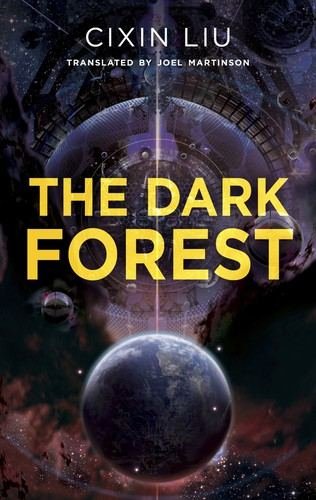
2008 · Remembrance of Earth's Past, book 2 · Science Fiction · Hard SF, Space Opera, First Contact
With sophons reading every document and conversation on Earth — but not minds — humanity's defence rests on the Wallfacers, four individuals empowered to act without ever explaining themselves. Three produce monstrous failures; the fourth is Luo Ji, a cynical nobody whose only qualification is that the enemy once tried to kill him. His decades-spanning gambit, via hibernation, a fairy-tale romance conjured to order and one broadcast spell cast at a star, culminates in the trilogy's central revelation: the universe is a dark forest, every civilisation a hunter, and survival belongs to the silent. The Battle of Darkness and the droplet attack supply the nightmares.
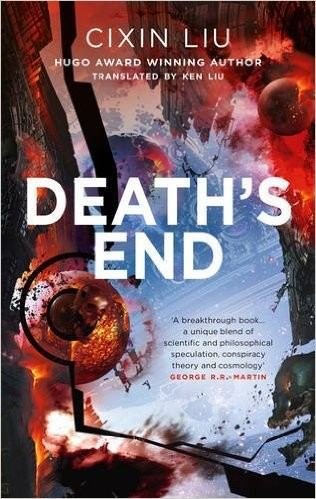
2010 · Remembrance of Earth's Past, book 3 · Science Fiction · Hard SF, Space Opera
Cheng Xin, an aerospace engineer from our era, surfaces from hibernation repeatedly across the centuries — each time at a hinge moment, each time choosing mercy, each time (the novel is ruthless about this) costing civilisation dearly, as deterrence collapses and the universe's true weapons come out: a solar system flattened into a two-dimensional artwork, dimensions themselves spent like ammunition, fairy tales smuggling physics past censors. Liu's finale runs from the fall of Constantinople to the literal end of the universe and the question of whether anything — a fish, a note, ten kilograms of mass — should be carried out of a dying cosmos. Scale without precedent, even in this database.
Series
b. 1942 · American
The field's most rigorous builder of alien minds and interstellar economics.
1917–2008 · British
The genre's great optimist-engineer and its finest writer of transcendent endings.
b. 1938 · American
The defining hard SF writer of his generation and the genre's great supplier of Big Objects and clever aliens.
