Author Profile · Science Fiction
Arthur C. Clarke
1917–2008 · British
Who was Arthur C. Clarke?
A Somerset farm boy who became wartime radar officer, chairman of the British Interplanetary Society, the man who worked out the geostationary communications satellite in 1945 (in a paper that earned him £15), and Sri Lanka's most famous resident. Clarke wrote the scientifically scrupulous and the quasi-mystical with equal fluency, often in the same chapter: his trademark is hardware described with engineering precision opening onto transcendence, humanity as a species on the verge of its next metamorphosis. Knighted in 1998, he shared with Asimov and Heinlein the informal title of the Big Three, and outlasted both with his serenity intact.
Why they matter
The genre's great optimist-engineer and its finest writer of transcendent endings. 2001 redefined what SF could be on screen; Childhood's End and Rama redefined first contact on the page; Clarke's Three Laws ('any sufficiently advanced technology...') entered the language.
Essential books — and where to start
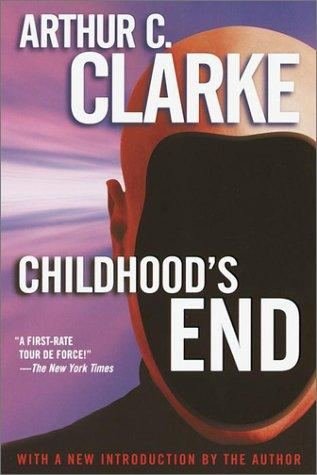
1953 · Science Fiction · First Contact, Social SF
Vast ships settle over Earth's cities and the Overlords end war, want and cruelty almost overnight — while declining, for fifty years, to show themselves, for reasons that constitute one of the genre's great reveals. Their true mission is stranger than benevolence: they are midwives for humanity's children, who are about to stop being human at all. The closing movement, in which the last man watches the Earth's children depart and the planet dissolve, is the most sublime ending in science fiction, equal parts triumph and grief.
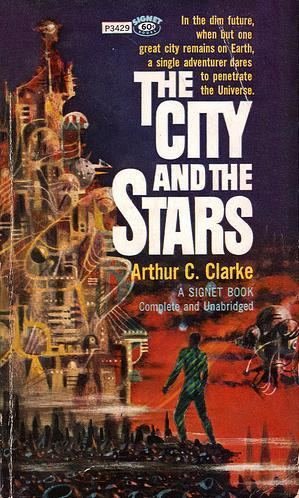
1956 · Science Fiction · Hard SF, Space Opera
A billion years hence, the city of Diaspar lies sealed under its dome on a desert Earth, its immortal inhabitants endlessly re-instantiated from memory banks, perfectly content — except Alvin, the first genuinely new person in millions of years, who wants out. His escape uncovers the pastoral telepaths of Lys, the truth behind the legend of the Mad Mind, and an invitation back to the stars humanity long ago abandoned. A rewrite of Clarke's earlier Against the Fall of Night, it is his most romantic book: deep time furnished with longing.
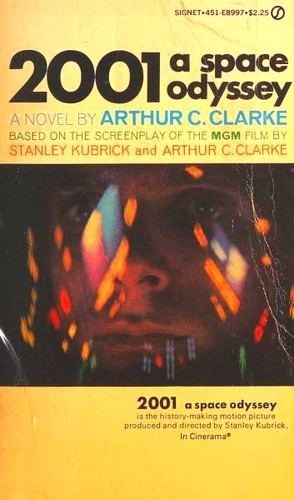
1968 · Space Odyssey, book 1 · Science Fiction · Hard SF, First Contact
From a bone tossed by a man-ape to a starchild contemplating Earth: Clarke's novel, developed simultaneously with Kubrick's film from the seed of his story 'The Sentinel', follows the black monoliths that nudge intelligence along — on the prehistoric veldt, under the lunar surface at Tycho, and out at Saturn (the film preferred Jupiter), where astronaut David Bowman and the courteous, homicidal computer HAL 9000 keep their appointments with destiny. The novel explains much the film leaves opaque; which approach is superior remains a quarrel for the ages.
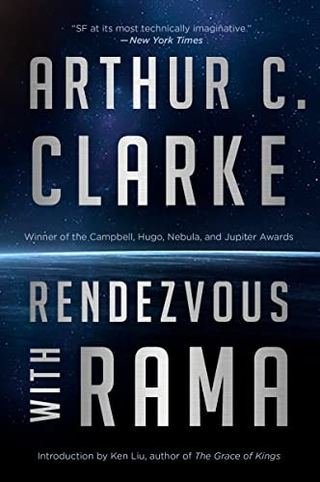
1973 · Science Fiction · Hard SF, First Contact
An object fifty kilometres long enters the Solar System, and it is unmistakably artificial: a sealed cylinder, spun for gravity, dark and silent. Commander Norton's crew have weeks to explore the interior — circular sea, crystalline cities, biological machines waking as the hidden sun warms — before Rama slingshots around the Sun and departs, indifferent to humanity. Clarke offers exploration as pure experience, with no antagonist and no explanations; the Ramans famously do everything in threes, and answer nothing. The 'big dumb object' story perfected at a stroke.
Series
b. 1942 · American
The field's most rigorous builder of alien minds and interstellar economics.
b. 1963 · Chinese
The writer who made science fiction a global, multipolar conversation: Three-Body conquered Anglophone publishing, Barack Obama's reading list and Netflix, and the Dark Forest hypothesis entered scientific and strategic discourse as a genuine contribution.
b. 1938 · American
The defining hard SF writer of his generation and the genre's great supplier of Big Objects and clever aliens.
