The Three-Body Problem
Hugo winner 2015 — the first novel in translation and the first by an Asian writer to take the award — opening Anglophone SF to Chinese science fiction at a stroke; adapted by Netflix and, at length, Tencent.

The essential authors of science fiction, fantasy & horror — and where to start reading them.
Book Entry · Science Fiction
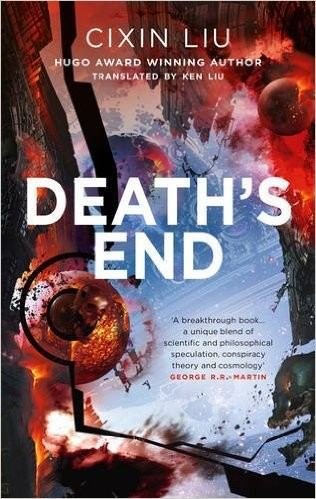
by Liu Cixin · 2010 · Remembrance of Earth's Past, book 3
Cheng Xin, an aerospace engineer from our era, surfaces from hibernation repeatedly across the centuries — each time at a hinge moment, each time choosing mercy, each time (the novel is ruthless about this) costing civilisation dearly, as deterrence collapses and the universe's true weapons come out: a solar system flattened into a two-dimensional artwork, dimensions themselves spent like ammunition, fairy tales smuggling physics past censors. Liu's finale runs from the fall of Constantinople to the literal end of the universe and the question of whether anything — a fish, a note, ten kilograms of mass — should be carried out of a dying cosmos. Scale without precedent, even in this database.
Locus Award winner and Hugo finalist; the trilogy's conclusion sealed its standing as the century's most influential work of translated SF and a summit of cosmological imagination.
The Three-Body trilogy: from a Cultural Revolution radio signal to the end of the universe, via the Dark Forest — first contact as cosmic game theory.
In the Guide from Remembrance of Earth's Past:
Prefer Amazon? Buying through these links may earn SFcrowsnest a small commission, at no extra cost to you.
Buy on Amazon UK → Buy on Amazon US →As an Amazon Associate, SFcrowsnest earns from qualifying purchases.
Hugo winner 2015 — the first novel in translation and the first by an Asian writer to take the award — opening Anglophone SF to Chinese science fiction at a stroke; adapted by Netflix and, at length, Tencent.
BSFA Award winner; a standalone noir that many readers rate the most purely enjoyable Revelation Space novel, and proof the universe could carry any genre dropped into it.
A masterpiece of far-future SF whose computer-stored citizens anticipate mind-uploading by decades; its mood of luminous melancholy influenced generations of British SF.