Author Profile · Science Fiction
Larry Niven
b. 1938 · American
Who is Larry Niven?
A Los Angeles oil-fortune heir who never needed the money and wrote as if paid by the idea: Known Space, his sprawling future history, runs on concepts the field promptly adopted as common property — organ-legging, the Kzinti, stasis fields, Puppeteers so cowardly that meeting one means something has gone badly wrong somewhere, and the Ringworld itself, an artefact so large its engineering spawned actual physics papers (and corrections, which he incorporated with thanks). With Jerry Pournelle he co-wrote the blockbuster first-contact classic The Mote in God's Eye. Niven's prose is functional, his dialogue cheerfully blunt; the ideas do the heavy lifting, and they lift planets.
Why they matter
The defining hard SF writer of his generation and the genre's great supplier of Big Objects and clever aliens. Ringworld is the canonical megastructure — Halo and a thousand successors are its direct descendants — and Known Space set the standard for engineered future histories.
Essential books — and where to start
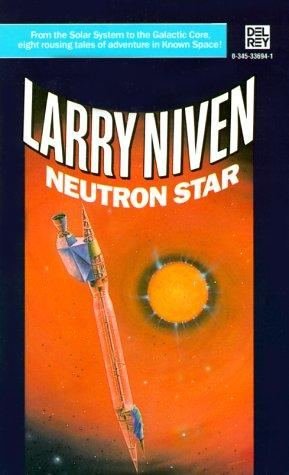
1968 · Known Space · Science Fiction · Hard SF, Space Opera
The collection that built Known Space: Beowulf Shaeffer, ex-pilot and professional reluctant hero, is blackmailed by the cowardly Puppeteers into skimming a neutron star to learn what killed the last crew — the title story's answer being a tidal-force physics lesson that won the Hugo. Around it orbit 'The Soft Weapon', 'Flatlander' and the rest: organ-bank economics, the Kzinti learning (slowly) not to attack humans, and General Products hulls guaranteed against everything except what happens in story one. Ideas-per-page density that became the hard SF benchmark.
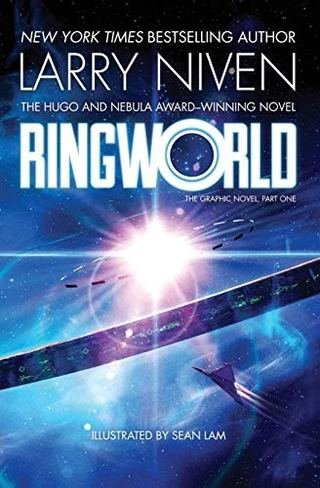
1970 · Known Space · Science Fiction · Hard SF, Space Opera, First Contact
Louis Wu, two hundred years old and bored, is recruited by a Puppeteer — alarming in itself, since Puppeteers don't take risks — alongside a Kzinti warrior and Teela Brown, a human bred (the Puppeteers believe) for luck. Their destination: an artefact circling a distant star, a ribbon-world with the surface area of three million Earths, engineered by parties unknown and now sliding into barbarism. The expedition crashes, and the book becomes a traverse of the impossible: thousand-mile shadow squares, sunflower defence fields, and the slow dawning of what the Ringworld's builders fled.
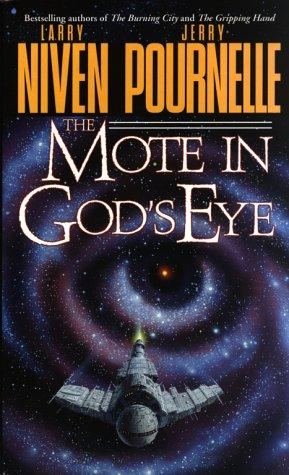
1974 · Science Fiction · First Contact, Space Opera, Military SF
Co-written with Jerry Pournelle. In 3017 the Second Empire of Man meets its first alien civilisation: the Moties, brilliant, asymmetric, specialised by caste — engineers who can rebuild a coffee machine into a miracle overnight, mediators bred to charm, and a secret their hosts will do anything to keep from their human visitors. The expedition aboard INSS MacArthur slowly uncovers the trap built into Motie biology: a reproductive ratchet that has cycled their civilisation through collapse uncounted times. First contact as intelligence problem, with one of SF's great tragic alien races.
Series
b. 1942 · American
The field's most rigorous builder of alien minds and interstellar economics.
1917–2008 · British
The genre's great optimist-engineer and its finest writer of transcendent endings.
b. 1963 · Chinese
The writer who made science fiction a global, multipolar conversation: Three-Body conquered Anglophone publishing, Barack Obama's reading list and Netflix, and the Dark Forest hypothesis entered scientific and strategic discourse as a genuine contribution.
