Author Profile · Science Fiction
H. G. Wells
1866–1946 · British
Who was H. G. Wells?
A draper's apprentice from Bromley who escaped via a science scholarship and T. H. Huxley's biology lectures, then spent the 1890s inventing most of science fiction's furniture in a single astonishing burst: time travel, alien invasion, invisibility, surgical uplift, all before 1900. Where Verne itemised the machinery, Wells used the fantastic as a scalpel for dissecting class, empire and evolution — his Martians are colonialism turned back on the colonisers. He later abandoned the scientific romance for utopian tracts and world-saving journalism, becoming one of the most famous public intellectuals on Earth, but it is those early, dark, sceptical novels that the genre has never stopped rewriting.
Why they matter
The single most influential science fiction writer who ever lived. The Time Machine, The War of the Worlds and their siblings established templates the genre still works within; practically every SF subgenre can trace a founding document to Wells.
Essential books — and where to start
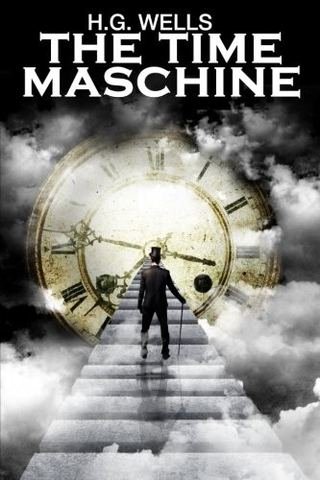
1895 · Science Fiction · Scientific Romance, Time Travel, Dystopia
An unnamed Victorian inventor demonstrates a machine for travelling through time, then returns a week later, bloodied and shaken, with a story. In the year 802,701 humanity has split into the childlike, surface-dwelling Eloi and the pale industrial Morlocks who feed on them — class division pursued to its evolutionary conclusion. Pressing further, the Traveller witnesses the death of the Earth itself under a swollen red sun, one of the bleakest and most beautiful passages in the genre. All this in barely a hundred pages.
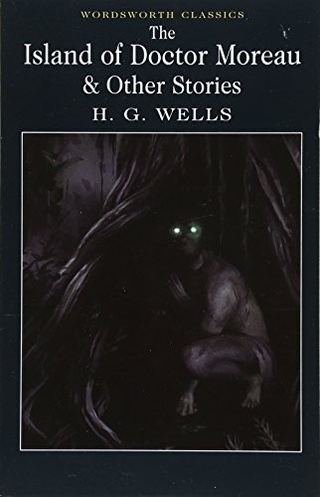
1896 · Science Fiction · Scientific Romance, Body Horror & Splatterpunk
Shipwrecked Edward Prendick washes up on a Pacific island where the exiled vivisectionist Moreau is carving animals into approximations of men, complete with a chanted Law to keep their instincts caged. The experiment is failing, the Beast Folk are regressing, and the question the novel keeps asking — what actually separates man from beast, beyond a little surgery and some rules nobody believes? — has not become more comfortable with age. The darkest of Wells's scientific romances, written in the shadow of Darwin and the vivisection debates.

1897 · Science Fiction · Scientific Romance
A stranger swathed in bandages takes rooms in a Sussex village inn, and the comedy of rural nosiness curdles into terror as Griffin — a brilliant, penniless researcher who has made himself invisible and cannot reverse it — slides from petty crime towards a self-declared Reign of Terror. Wells plays the premise with rigorous logic (an invisible man is naked, cold, and visible when it rains) and uses it to anatomise how power without accountability corrupts. The ending, with Griffin beaten to death by a mob, restores visibility and pathos in the same stroke.
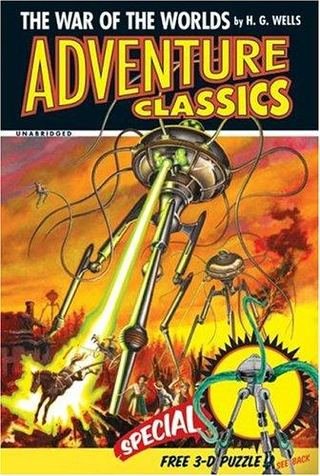
1898 · Science Fiction · Scientific Romance, First Contact, Post-Apocalyptic
Cylinders fall on Horsell Common, and within days Martian fighting-machines are striding across Surrey, heat-raying the Home Counties and feeding on human blood, while the unnamed narrator scrambles through a collapsing England. Wells wrote it explicitly as empire turned inward — what Britain did to Tasmania, done to Woking — and his vision of refugee columns and societal disintegration proved horribly prophetic of the century ahead. The Martians' downfall, by humble terrestrial bacteria, remains one of the great endings in the genre.
1947–2006 · American
The writer who put race, gender and the body at the centre of American SF and made the field reckon with slavery as its own subject matter.
b. 1972 · American
The defining SFF writer of the 2010s: the unprecedented Hugo three-peat marked the genre's centre of gravity shifting — formally, demographically and thematically — and the Broken Earth is already canon, taught from secondary schools to doctoral seminars.
1925–1991 / 1933–2012 · Russian (Soviet)
The defining SF writers of the Soviet world and among the most influential anywhere: Roadside Picnic seeded Tarkovsky's Stalker, the S.T.A.L.K.E.R.
