Author Profile · Science Fiction
Arkady & Boris Strugatsky
1925–1991 / 1933–2012 · Russian (Soviet)
Who was Arkady & Boris Strugatsky?
The brothers Strugatsky — Arkady the military translator of Japanese, Boris the astronomer — were Soviet science fiction: the most beloved and most suspected writers of their world, whose books circulated in samizdat when the censors balked. Their early optimistic Noon Universe curdled, book by book, into the great theme of progress refused: alien visitations that ignore humanity entirely, observers forbidden to intervene in feudal cruelty and unable to bear it, zones where physics has been casually broken by passing picnickers. They wrote comedy (Monday Begins on Saturday, the definitive satire of research institutes) and despair with the same fluent irony, and every line carried double meaning for readers trained to look.
Why they matter
The defining SF writers of the Soviet world and among the most influential anywhere: Roadside Picnic seeded Tarkovsky's Stalker, the S.T.A.L.K.E.R. games, Metro, Annihilation and the entire Zone tradition — the alien as something that doesn't notice us at all.
Essential books — and where to start
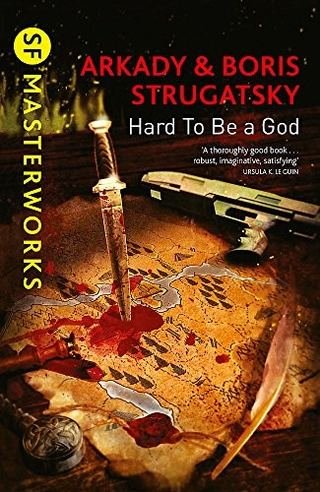
1964 · Science Fiction · Social SF, Dystopia
Anton, agent of Earth's communist utopia, lives on the feudal world of Arkanar as the noble Don Rumata — licensed to observe, bribe and rescue the occasional bookworm, forbidden to intervene as the kingdom slides from ordinary medieval cruelty into something the historians' models didn't predict: a systematic extermination of the literate, the grey shopkeeper-militias giving way to the black monks of Don Reba. The Progressor's dilemma — godlike power, historical patience, and a sword he must not draw — tightens until it snaps. Written in 1963, read by every Soviet intellectual as exactly what it was.
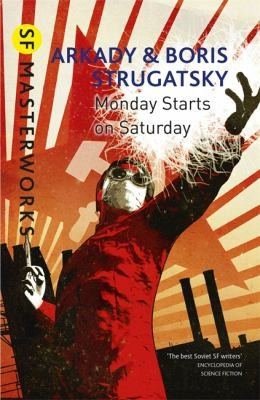
1965 · Fantasy · Comic Fantasy, Satirical SF, Urban Fantasy
Programmer Sasha Privalov picks up two hitchhikers in Karelia and is recruited into NIIChaVo — the National Institute for the Technology of Witchcraft and Thaumaturgy — where Baba Yaga's hut is a museum annex, the wish-granting pike lives in a well, a vampire runs the cafeteria requisitions, and the genuinely dedicated researchers work through New Year's Eve because for them Monday begins on Saturday. The Strugatskys' love letter to Soviet scientific idealism doubles as its satire: the institute's most unforgettable creation is Professor Vybegallo, breeder of 'fully satisfied man', whose final model consumes the universe's goods until it must be stopped. Magic as bureaucracy, joy as overtime.
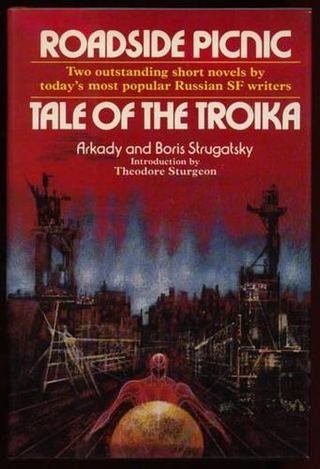
1972 · Science Fiction · First Contact, Post-Apocalyptic, Social SF
Aliens came, stayed briefly, and left without noticing humanity — like picnickers leaving a verge strewn with wrappers, batteries and things no ant should touch. The six Zones they left behind break physics casually and kill carelessly, and Red Schuhart, a 'stalker' of the Harmont Zone, smuggles artefacts out for buyers who understand them no better than he does, while the Zone's aftermath warps his daughter into something soft-furred and silent. The famous ending — Red at the Golden Sphere, the wish-granting artefact, with a borrowed prayer he doesn't believe and can't improve on — is post-war SF's most desperate benediction: happiness for everybody, free, and let no one be left behind.
1954–2013 · British (Scottish)
The writer who revived British space opera virtually single-handed and gave SF its most fully argued utopia.
1947–2006 · American
The writer who put race, gender and the body at the centre of American SF and made the field reckon with slavery as its own subject matter.
1928–1982 · American
The genre's great metaphysician.
