The Dark Forest
Source of the Dark Forest hypothesis, now genuine currency in Fermi-paradox and existential-risk debates — the rare SF concept to cross into scientific discourse with its name attached.

The essential authors of science fiction, fantasy & horror — and where to start reading them.
Book Entry · Science Fiction
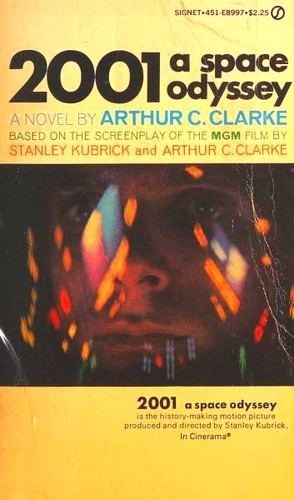
by Arthur C. Clarke · 1968 · Space Odyssey, book 1
From a bone tossed by a man-ape to a starchild contemplating Earth: Clarke's novel, developed simultaneously with Kubrick's film from the seed of his story 'The Sentinel', follows the black monoliths that nudge intelligence along — on the prehistoric veldt, under the lunar surface at Tycho, and out at Saturn (the film preferred Jupiter), where astronaut David Bowman and the courteous, homicidal computer HAL 9000 keep their appointments with destiny. The novel explains much the film leaves opaque; which approach is superior remains a quarrel for the ages.
Half of the most influential SF artefact of the twentieth century. HAL is the culture's archetypal AI, and the book seeded three sequels, beginning with 2010: Odyssey Two.
Clarke's monolith cycle — 2001 and its three sequels — charting humanity's guided evolution from the African veldt to the stars.
In the Guide from Space Odyssey:
Prefer Amazon? Buying through these links may earn SFcrowsnest a small commission, at no extra cost to you.
Buy on Amazon UK → Buy on Amazon US →As an Amazon Associate, SFcrowsnest earns from qualifying purchases.
Source of the Dark Forest hypothesis, now genuine currency in Fermi-paradox and existential-risk debates — the rare SF concept to cross into scientific discourse with its name attached.
Swept the Hugo and Nebula for Best Novel.
The intellectual ceiling of first-contact fiction, openly echoed by every serious SETI novel since (Contact and Arrival both stand downstream); also the book Lem himself ranked among his best.