Who was Anne Rice?
Born Howard Allen O'Brien in New Orleans — she chose 'Anne' on her first day of school, an early sign of the self-invention to come — Rice wrote Interview with the Vampire in five weeks of grief after her young daughter's death from leukaemia, pouring the loss into the immortal child Claudia. The book moved the vampire from predator to protagonist: her undead narrate, philosophise, suffer and seduce, and the Vampire Chronicles' New Orleans — wrought iron, decay, Catholicism gone gorgeously to seed — became one of horror's defining landscapes. She wrote erotica as A. N. Roquelaure, returned spectacularly to Catholicism and then departed again, conducted legendary one-woman wars against her critics, and sold over a hundred million books while doing it.
Why they matter
The author who made the vampire a point-of-view character and built the template — sympathetic immortals, gothic sensuality, found families of the undead — on which paranormal romance, urban fantasy and a thousand brooding antiheroes now stand.
Essential books — and where to start
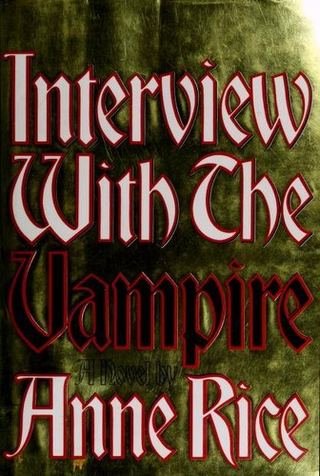
1976 · The Vampire Chronicles, book 1 · Horror · Vampire Fiction, Gothic Horror
In a San Francisco room, a vampire tells a boy with a tape recorder his two hundred years: Louis, the Louisiana planter who accepted Lestat's dark gift in 1791 and has regretted the company ever since; the child Claudia, made immortal at five and ripening into a woman's mind trapped in a doll's body — the book's great horror and its great grief, written from Rice's loss of her own daughter; the Théâtre des Vampires, and the discovery that the old world holds no answers, only older vampires. The confessional structure made the monster the consciousness, and the genre has never reversed it.
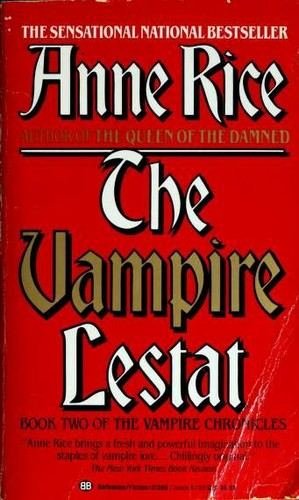
1985 · The Vampire Chronicles, book 2 · Horror · Vampire Fiction, Gothic Horror, Dark Fantasy
Lestat wakes in 1984, reads Louis's unflattering memoir, and does the only proportionate thing: forms a rock band, announces vampirism to the world from a stage, and writes his own version. The autobiography that follows — provincial French nobility, Paris theatre, the dark gift taken violently, the quest through Marius to Those Who Must Be Kept, the Egyptian roots of the entire bloodline — converts Rice's mythology from chamber piece to epic, and replaces Louis's mourning with Lestat's magnificent appetite: the 'brat prince' as the Chronicles' true voice. The cliffhanger (Akasha's eyes opening) detonates directly into The Queen of the Damned.
Series
1947–2015 · British
The great sensualist of fantasy and a key architect of its dark, eroticised register — the bridge between Moorcock's generation and modern dark fantasy and paranormal fiction.
1847–1912 · Irish
Dracula codified the vampire for all time and established the template of ancient evil versus modern method that underpins a vast swathe of horror since.
1911–1968 · British
The proof that fantasy needs neither magic nor maps to be vast.
