Who was Bram Stoker?
By day the indispensable business manager of London's Lyceum Theatre and devoted lieutenant to the actor Henry Irving; by night, the Dublin-born civil servant's son who spent seven years researching Transylvanian folklore in libraries and produced the most influential horror novel ever written. Dracula arrived in 1897 dressed in the modern technology of its day — typewriters, phonographs, shorthand diaries — an epistolary thriller about an ancient predator invading contemporary London. Stoker wrote a dozen other novels, some agreeably lurid, none remotely as immortal as the Count, who escaped his creator entirely and colonised the world's imagination.
Why they matter
Dracula codified the vampire for all time and established the template of ancient evil versus modern method that underpins a vast swathe of horror since. Few characters in any genre have generated a larger cultural afterlife.
Essential books — and where to start
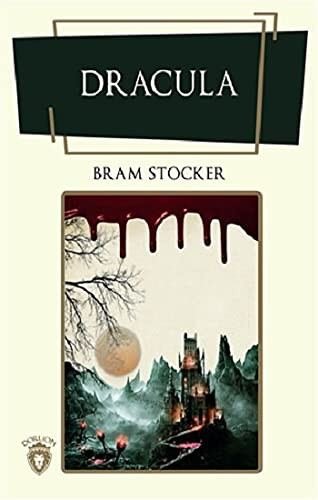
1897 · Horror · Gothic Horror, Vampire Fiction
Solicitor Jonathan Harker travels to the Carpathians to close a property deal and finds his client crawling head-first down the castle wall. Count Dracula's relocation to England — pursued through ships' logs, diaries, phonograph recordings and newspaper clippings — becomes a duel between the ancient undead and a syndicate of modern professionals led by the Dutch polymath Van Helsing. Stoker's epistolary structure gives the supernatural a documentary credibility, and his Count, mostly off-stage, dominates every page he isn't on. Mina Harker, typewriter in hand, quietly runs the entire counter-offensive.
1903 · Horror · Gothic Horror, Supernatural Horror
Egyptologist Abel Trelawny lies in a trance in his London house, surrounded by relics of Queen Tera, an ancient sorceress with a severed hand bearing seven fingers and plans for resurrection that have been maturing for five thousand years. Stoker channels the Egyptomania of his era into a slow-building occult thriller that culminates in the Great Experiment to revive the queen. The original 1903 ending is bleakly nihilistic; Stoker's publishers made him soften it for the 1912 reissue, and editions still vary.
1911 · Horror · Gothic Horror, Folk Horror
In deepest Derbyshire, the icily beautiful Lady Arabella March may be the human mask of a colossal primeval serpent dwelling in a pit beneath her house. Stoker's final novel is feverish, structurally chaotic and intermittently lurid even by his standards — it was written in his last illness — yet its core images of ancient reptilian evil coiled under the English countryside have proved weirdly durable. A guilty pleasure with genuinely unnerving moments, and a clear ancestor of folk horror's buried-pagan-survival mode.
1941–2021 · American
The author who made the vampire a point-of-view character and built the template — sympathetic immortals, gothic sensuality, found families of the undead — on which paranormal romance, urban fantasy and a thousand brooding antiheroes now stand.
1916–1965 · American
The author of the finest haunted-house novel in the language and the great demonstration that horror's true engine is psychology: Hill House and 'The Lottery' are permanent fixtures of the canon and the curriculum alike.
1947–2015 · British
The great sensualist of fantasy and a key architect of its dark, eroticised register — the bridge between Moorcock's generation and modern dark fantasy and paranormal fiction.
