
Black Jack
Tezuka's unlicensed genius surgeon performs medical miracles for exorbitant fees and murky ethics; episodic, humane, and one of the master's very finest works.
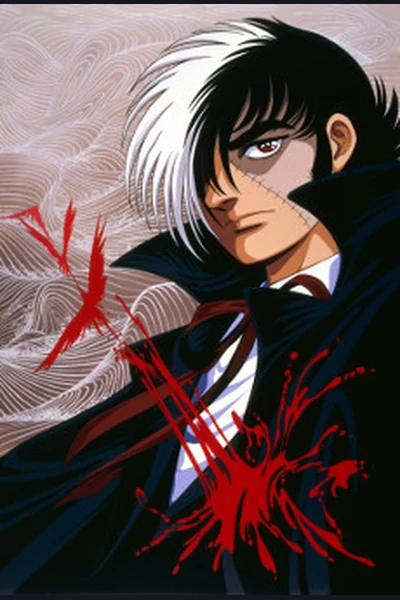
Black Jack is an unlicensed surgeon who operates from a cliff-top house, charges impossible fees and performs procedures respectable hospitals declare hopeless. His face is scarred, his hair divided black and white, and his ethics considerably more coherent than his invoices initially suggest.
Osamu Tezuka's manga ran principally in Akita Shoten's Weekly Shonen Champion from 1973 to 1983. Tezuka had medical training, though he chose manga rather than clinical practice. The series let him combine anatomical fascination with distrust of institutions that place money, prestige or rules above patients.
Overview
Each case brings Black Jack a person whom ordinary medicine cannot or will not help. He may demand a fortune, test the patient's character or operate under conditions that would cause a modern regulator to achieve escape velocity.
He lives with Pinoko, a childlike girl assembled surgically from a parasitic twin and enclosed in an artificial body. She calls herself his wife; he treats her as family while the premise produces comedy and discomfort in roughly equal measure.
Why it matters
The stories are medical fables rather than reliable clinical instruction. Diseases and operations can be fantastical, but the ethical questions remain recognisable: Who deserves care? What is a life worth? When does professional authority become cowardice?
Black Jack's fees often expose the client's values rather than his greed. Tezuka makes him abrasive so compassion must appear through action, not a white coat and reassuring leaflet.
What to expect
Expect surgery, illness, disability, death and bodily detail. Older stories include stereotypes and medical ideas that have dated, while disability can be framed as tragedy or cure. Tezuka's humanism is genuine but not exempt from its period.
The episodic structure suits short reading. Sentiment can be forceful, and nature occasionally delivers moral judgement with suspicious narrative timing.
Adaptations and versions
Osamu Dezaki's OVA series, beginning in 1993, offers dark, adult medical drama with striking direction. A 2004 television anime is broader and more family-accessible. Films, specials and the prequel Young Black Jack provide further versions.
Manga collections vary because some stories were revised, withdrawn or reordered. Check edition contents rather than assuming volume numbering is universal.
Where to start
Begin with a curated English manga collection or Dezaki's OVAs. The manga displays the full range from grotesque to tender; the OVAs provide the strongest screen atmosphere. Do not use either to diagnose a rash.
Verdict The SFcrowsnest take
Black Jack is among Tezuka's finest creations: an impossible doctor used to test the very possible failures of medicine, money and moral convenience.
The procedures are fantasy. The anger at avoidable suffering is not. Read case by case and keep the NHS, for all its difficulties; Black Jack's private quote may arrive with several additional zeroes.