
Space Battleship Yamato (Star Blazers)
A sunken WWII battleship rebuilt as a starship races to save an irradiated Earth; as Star Blazers it handed the West serialised, story-arc anime and never looked back.
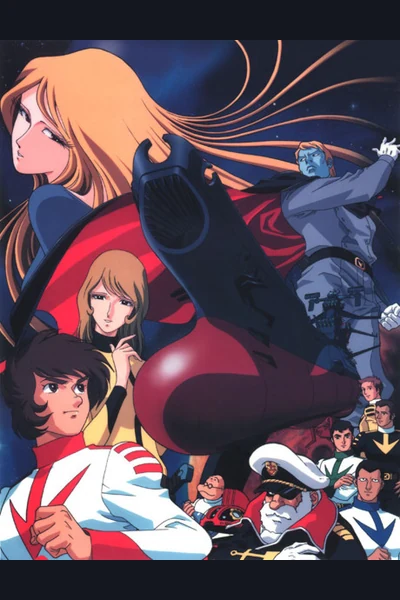
Earth is dying beneath radioactive bombardment from the alien Gamilas. Humanity rebuilds the wreck of the Second World War battleship Yamato as a spacecraft and sends it to distant Iscandar for technology that might restore the planet. The crew has one year. Space travel has therefore acquired a deadline, a mournful theme tune and a very complicated relationship with naval memory.
The 1974 television series emerged from producer Yoshinobu Nishizaki's project with major creative contributions from Leiji Matsumoto. Initially unsuccessful, it gained an audience through reruns and compilation films. The edited American version Star Blazers introduced many Western viewers to serialised anime in which missing an episode meant the plot had continued without permission.
Overview
Young officers Susumu Kodai and Daisuke Shima serve under Captain Okita as the Yamato crosses hostile space. Wave Motion technology supplies both propulsion and a weapon capable of catastrophic force, ensuring the vessel sent to save life carries a persuasive means of ending it.
The journey combines battles, sacrifice and encounters that complicate the enemy. Gamilas leader Dessler moves from villain towards enduring rival, while the crew's finite time gives each delay emotional cost.
Why it matters
Yamato helped shift television anime towards long-form drama for older audiences. Character deaths, continuity and orchestral seriousness showed that science-fiction animation could sustain an epic rather than reset each week.
The use of the historical Yamato remains politically charged. The real ship was an instrument of Imperial Japan; transforming it into Earth's saviour can evoke mourning, nationalism or revision according to interpretation. The series' anti-war sacrifice coexists with reverence for military imagery, a tension worth examining rather than saluting past.
What to expect
Expect naval space combat, death, duty and melodrama. The original production is visibly 1970s but often powerful. Star Blazers edits violence and changes names while preserving unusual narrative continuity for its market.
Adaptations and versions
The original series leads into sequel series and films with a continuity complicated by alternate endings. Modern remake Space Battleship Yamato 2199 retells the first voyage with excellent animation and expanded characters; 2202 and later productions continue that branch.
Where to start
Choose 2199 for a polished modern entrance or the 1974 original for history. Star Blazers is valuable localisation archaeology but not the unaltered work. Follow the chosen continuity before crossing timelines; the Yamato has enough navigation duties.
Verdict The SFcrowsnest take
Space Battleship Yamato is foundational space opera: earnest, musical and burdened by the ship it resurrects. Its best drama asks whether survival can be achieved without becoming the destroyer one fears.
The 1974 series is historically essential; 2199 is the easiest recommendation. Board with political awareness and a tolerance for speeches delivered while the radiation clock continues ticking.