
Cyborg 009
Nine ordinary people abducted and rebuilt as cyborg super-soldiers turn on their makers; a foundational pillar of the superhero-team genre, decades ahead of its time.
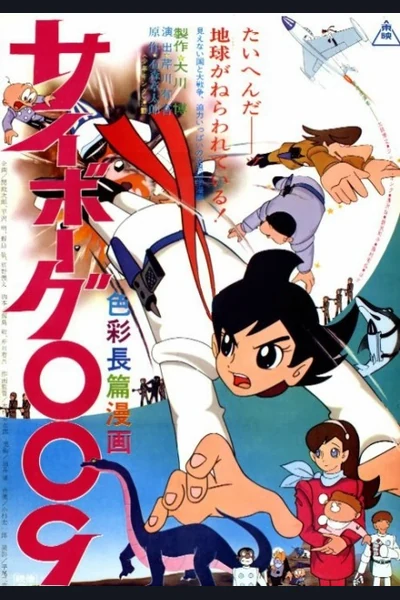
The arms-dealing organisation Black Ghost kidnaps nine people from different countries and rebuilds them as cyborg weapons. The captives rebel, turn their abilities against their makers and spend the rest of the story confronting militarism, prejudice and the manufacturers' recurring failure to understand employee retention.
Shotaro Ishinomori began the manga in 1964 and revisited it across magazines and decades. Anime adaptations appeared in 1966–68, 1979–80 and 2001–02, with later films and computer-animated projects offering new conclusions and continuities.
Overview
Japanese delinquent Joe Shimamura becomes 009, equipped with acceleration that makes the world appear nearly still. The team includes 003, French dancer Françoise Arnoul with enhanced senses; 002, American flyer Jet Link; and seven others carrying different bodies, histories and powers.
Their international composition was ambitious for 1960s manga. It also arrived with caricatures and stereotypes, particularly in early designs. Representation can be pioneering and imperfect in the same panel.
Why it matters
Cyborg 009 established the reluctant super-team long before similar groups became standard. The heroes did not choose power and remain suspicious of institutions that want to use it. Their bodies make war's exploitation literal.
Ishinomori's dynamic layouts and humane science fiction influenced sentai, Kamen Rider and superhero manga broadly. He repeatedly returned to the team because the anti-war argument remained discouragingly available.
What to expect
Expect superhero action, Cold War anxieties, death, racism and questions of bodily autonomy. Tone varies from children's adventure to serious science fiction. Older material requires context for ethnic depiction and gender roles.
Adaptations and versions
The 1979 anime is a much-loved colour version; the 2001 series offers a broad modern retelling. 009 Re:Cyborg and Call of Justice use computer animation and later threats, but are not ideal introductions.
The manga's publication order is complicated by moves and unfinished final plans. Modern collected editions may arrange arcs differently.
Where to start
Try the 2001 anime for accessibility or a translated early manga collection for historical importance. The 1979 series is rewarding where available. Choose one continuity before adding the others; nine cyborgs already provide adequate headcount.
Verdict The SFcrowsnest take
Cyborg 009 is foundational superhero science fiction with an anti-war conscience. Its designs sometimes show their age, while its distrust of people who manufacture soldiers has not dated at all.
The team deserves wider English-language recognition. They were built as weapons and became heroes by refusing the job description.