
Baki the Grappler
Impossibly muscled men hit one another very hard in pursuit of being the strongest creature alive; gloriously, knowingly absurd martial-arts excess.
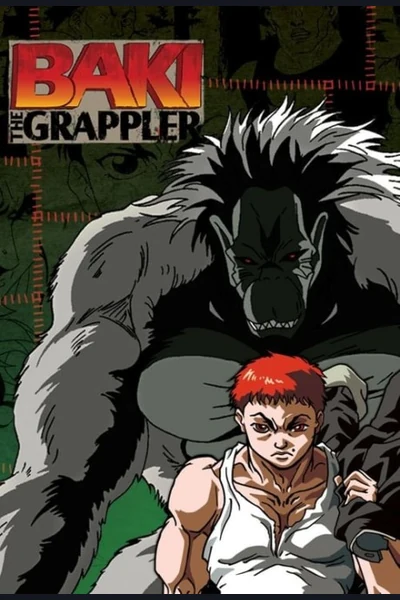
Baki Hanma trains to defeat his father Yujiro, widely described as the strongest creature on Earth. Yujiro treats paternity as an opportunity to establish dominance and possesses back muscles that form a demonic face, anatomy having withdrawn from the negotiations.
Keisuke Itagaki's manga began with Grappler Baki in Akita Shoten's Weekly Shonen Champion in 1991. Successive series continue Baki's career through underground tournaments, escaped convicts, prehistoric men and revived swordsmen. Anime versions include a 1994 OVA, a 2001 television series and the later Baki and Baki Hanma productions distributed internationally by Netflix.
Overview
Baki enters illegal arenas where fighters bring karate, wrestling, kung fu, street violence and personal theories about the human skeleton. Matches are narrated with pseudo-scientific confidence, historical anecdotes and diagrams that begin plausibly before leaving medical literature by a side door.
The cast includes Doppo Orochi, Kaoru Hanayama, Retsu Kaioh and many others whose bodies resemble competing architectural proposals. They seek strength as identity, vocation and increasingly elaborate social disorder.
Why it matters
Itagaki understands combat spectacle at an instinctive level. Faces distort, muscles coil and impact becomes grotesque theatre. The series is absurd but rarely winks; solemn narration makes the absurdity funnier than parody would.
Beneath the violence lies a strange study of masculinity, fathers and male admiration. Fighters mutilate one another, then recognise beauty, discipline and intimacy in the opponent. The text is aggressively heterosexual in declaration and frequently more complicated in visual practice.
What to expect
Expect broken bones, mutilation, sexual violence, extreme musculature and combat operating beyond physics. This is adult material. Women receive little space and often exist around male development rather than within the central world.
Adaptations and versions
The 2001 anime adapts Baki's childhood and the Maximum Tournament, making it the useful screen beginning. Netflix-era Baki starts later with the death-row convicts; Baki Hanma continues into major father-and-son material.
Starting with Netflix is possible but feels like entering a gym after everybody has already developed a personal feud with the equipment.
Where to start
Read Grappler Baki from the beginning or watch the 2001 series before the Netflix continuations. Manga licensing in English is incomplete across early material, so availability may dictate the route.
Verdict The SFcrowsnest take
Baki is martial-arts excess performed with absolute conviction. It is grotesque, repetitive and capable of spending several pages proving that a punch resembles an event from prehistory.
For the right audience, this is magnificent nonsense with real graphic intelligence. For everyone else, the muscles have already blocked the exit.