Cryptonomicon
Locus winner and a Hugo finalist; the hacker generation's foundational epic, credited with seeding real cypherpunk and cryptocurrency thinking, and gateway to his Baroque Cycle prequels.

The essential authors of science fiction, fantasy & horror — and where to start reading them.
Book Entry · Science Fiction
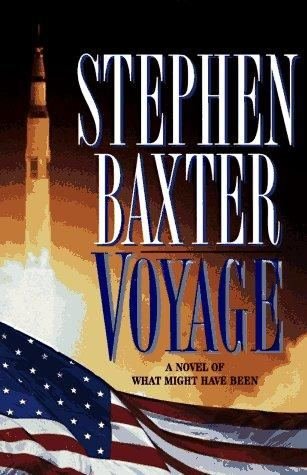
Kennedy survives Dallas (wheelchair-bound, a voice rather than a president), and his 1969 phone call to the Apollo 11 astronauts commits America to Mars. Baxter then does something braver than triumphalism: he prices it. The Ares programme cannibalises the shuttle, the probes, the space stations — the entire robotic golden age — and costs lives in a hauntingly plausible pad disaster, before geologist Natalie York, the mission's conscience, finally reads Martian stone with human eyes. Written by an engineer who applied to be a cosmonaut, it is the definitive what-if of the space age: wish granted, invoice attached.
Sidewise Award winner for alternate history; NASA-procedural SF's high-water mark, dramatised by the BBC and visibly ancestral to For All Mankind.
Prefer Amazon? Buying through these links may earn SFcrowsnest a small commission, at no extra cost to you.
Buy on Amazon UK → Buy on Amazon US →As an Amazon Associate, SFcrowsnest earns from qualifying purchases.
Locus winner and a Hugo finalist; the hacker generation's foundational epic, credited with seeding real cypherpunk and cryptocurrency thinking, and gateway to his Baroque Cycle prequels.
Half of the most influential SF artefact of the twentieth century.
BSFA Award winner; a standalone noir that many readers rate the most purely enjoyable Revelation Space novel, and proof the universe could carry any genre dropped into it.