Blood of Elves
Premio Ignotus and (retrospectively) David Gemmell Legend Award winner: the pivot from celebrated stories to continental saga, and the template for the games' and series' Ciri-centred mythology.

The essential authors of science fiction, fantasy & horror — and where to start reading them.
Book Entry · Horror
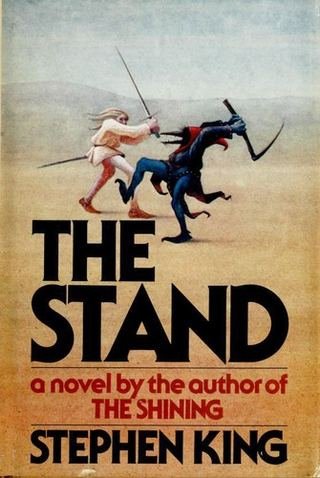
A security failure at a Defense Department lab releases Captain Trips, a superflu with a 99.4 per cent completion rate, and King spends three hundred unhurried pages killing America — the tunnel sequence, the clear, the dreams beginning. The survivors sort themselves by dream: toward Mother Abagail, a hundred and eight years old in a Nebraska cornfield, or toward Randall Flagg, the walkin' dude, the genre's best devil, building order in Las Vegas. The epic that follows — society rebooted in Boulder, the bomb in the closet, the final walk west — is King's Lord of the Rings, by his own account: American geography as moral landscape. The 1990 uncut edition restores four hundred pages.
Perennially voted King's masterpiece by his readership and the model for the modern plague epic — Station Eleven, The Passage and the entire premium-TV apocalypse owe it rent; twice adapted for television.
Prefer Amazon? Buying through these links may earn SFcrowsnest a small commission, at no extra cost to you.
Buy on Amazon UK → Buy on Amazon US →As an Amazon Associate, SFcrowsnest earns from qualifying purchases.
Premio Ignotus and (retrospectively) David Gemmell Legend Award winner: the pivot from celebrated stories to continental saga, and the template for the games' and series' Ciri-centred mythology.
The book where the Shannara saga found its own voice; its tree-rebirth tragedy remains one of commercial fantasy's most affecting endings, and it anchored the MTV adaptation.
Hugo winner 2016 — first volume of the unprecedented three-peat — and an instant canon entry: the most influential fantasy novel of its decade, on syllabuses from sixth forms to doctoral programmes.