The Hobbit
The gateway to modern fantasy — perhaps a hundred million copies — whose unexpected demand for a sequel produced The Lord of the Rings; Peter Jackson's trilogy stretched it to cinematic breaking point, the book remains unstretched.

The essential authors of science fiction, fantasy & horror — and where to start reading them.
Book Entry · Fantasy
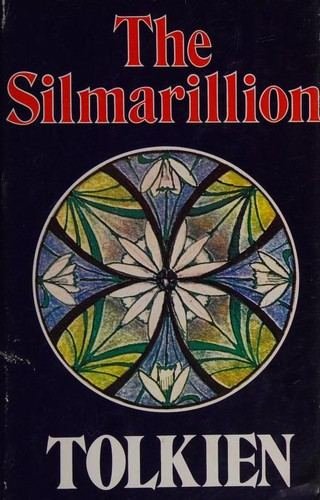
The matter of Middle-earth's First Age, sixty years in the writing and published four years after Tolkien's death, edited by his son Christopher: the creation of the world in music and the discord of Melkor; the Silmarils, three jewels holding the light of the dead Trees; Fëanor's terrible oath and the Elves' long defeat in Beleriand; Beren and Lúthien (the names on Tolkien's and Edith's own gravestones); Túrin's Kalevala-dark ruin; and the drowning of Númenor. Not a novel but a mythology — biblical in cadence, remorseless in cumulative power — and the bedrock under everything else he wrote.
The proof of how deep fantasy worldbuilding can go: the invented mythology that all subsequent 'legendarium' projects imitate, and the source mined (loosely) for Amazon's Rings of Power.
The Hobbit, The Lord of the Rings, The Silmarillion and the wider legendarium: Tolkien's life-work, the invented mythology that founded modern fantasy.
In the Guide from Middle-earth:
Prefer Amazon? Buying through these links may earn SFcrowsnest a small commission, at no extra cost to you.
Buy on Amazon UK → Buy on Amazon US →As an Amazon Associate, SFcrowsnest earns from qualifying purchases.
The gateway to modern fantasy — perhaps a hundred million copies — whose unexpected demand for a sequel produced The Lord of the Rings; Peter Jackson's trilogy stretched it to cinematic breaking point, the book remains unstretched.
The founding text of revisionist epic fantasy: George R.
The debut that announced the decade's defining new voice — Locus First Novel winner, Hugo/Nebula finalist — and opened the door the Broken Earth would later walk through with three Hugos in hand.