The Lord of the Rings
The most influential fantasy work ever written and among the most-read novels of the twentieth century: the genre's commercial category, quest architecture and worldbuilding standard all descend from it.

The essential authors of science fiction, fantasy & horror — and where to start reading them.
Book Entry · Fantasy
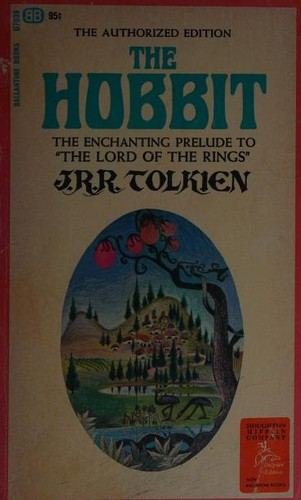
Bilbo Baggins of Bag End, a hobbit of impeccable respectability, is ambushed over tea by thirteen dwarves and a wizard, and contracted — as burglar — for the recovery of the Lonely Mountain's treasure from the dragon Smaug. The road provides trolls, goblins, eagles, Beorn, Mirkwood's spiders and, in a dark lakeside cave, a riddle game with a creature called Gollum over a small gold ring whose significance its finder will spend decades not suspecting. Bilbo leaves home a grocer's notion of a person and returns a poet's: the prototype of fantasy's most durable arc. Written for Tolkien's children; conquered everyone else's.
The gateway to modern fantasy — perhaps a hundred million copies — whose unexpected demand for a sequel produced The Lord of the Rings; Peter Jackson's trilogy stretched it to cinematic breaking point, the book remains unstretched.
The Hobbit, The Lord of the Rings, The Silmarillion and the wider legendarium: Tolkien's life-work, the invented mythology that founded modern fantasy.
In the Guide from Middle-earth:
Prefer Amazon? Buying through these links may earn SFcrowsnest a small commission, at no extra cost to you.
Buy on Amazon UK → Buy on Amazon US →As an Amazon Associate, SFcrowsnest earns from qualifying purchases.
The most influential fantasy work ever written and among the most-read novels of the twentieth century: the genre's commercial category, quest architecture and worldbuilding standard all descend from it.
Whitbread Book of the Year 2001 — the first children's book ever to take the overall prize — and the most theologically audacious bestseller in the YA canon; the trilogy's capstone and lightning rod alike.
Guardian Award winner and the launch of Chrestomanci: the wittiest of the great British children's fantasy sequences and a visible ancestor of the boarding-school-magic boom that followed two decades later.