The Amber Spyglass
Whitbread Book of the Year 2001 — the first children's book ever to take the overall prize — and the most theologically audacious bestseller in the YA canon; the trilogy's capstone and lightning rod alike.

The essential authors of science fiction, fantasy & horror — and where to start reading them.
Book Entry · Fantasy
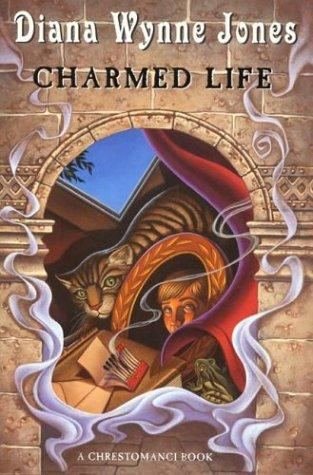
Orphaned Cat Chant tags along behind his dazzling sister Gwendolen, a witch of vaulting ambition, when the enigmatic Chrestomanci — nine-lived government enchanter, devastating dressing-gowns — takes them into his castle. Gwendolen, denied advancement, escapes into a parallel world and leaves a baffled double in her place; Cat, who believes he has no magic at all, turns out to be the most dangerous person in the book, his lives being spent by someone else like small change. Jones's trademarks complete: family as the site of the sharpest cruelty, magic as moral accounting, comedy with a blade in it.
Guardian Award winner and the launch of Chrestomanci: the wittiest of the great British children's fantasy sequences and a visible ancestor of the boarding-school-magic boom that followed two decades later.
Jones's sequence about the nine-lived enchanter who regulates magic across the Related Worlds — family politics, parallel universes and the best-dressed civil servant in fantasy.
In the Guide from Chrestomanci:
Prefer Amazon? Buying through these links may earn SFcrowsnest a small commission, at no extra cost to you.
Buy on Amazon UK → Buy on Amazon US →As an Amazon Associate, SFcrowsnest earns from qualifying purchases.
Whitbread Book of the Year 2001 — the first children's book ever to take the overall prize — and the most theologically audacious bestseller in the YA canon; the trilogy's capstone and lightning rod alike.
The bestselling opening volume in publishing history and the recruitment event for a global reading generation: whatever else is said (and everything has been), the modern mass audience for fantasy walks through this book.
The gateway to modern fantasy — perhaps a hundred million copies — whose unexpected demand for a sequel produced The Lord of the Rings; Peter Jackson's trilogy stretched it to cinematic breaking point, the book remains unstretched.