Chasm City
BSFA Award winner; a standalone noir that many readers rate the most purely enjoyable Revelation Space novel, and proof the universe could carry any genre dropped into it.

The essential authors of science fiction, fantasy & horror — and where to start reading them.
Book Entry · Science Fiction
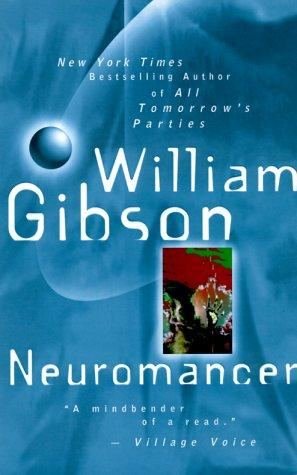
by William Gibson · 1984 · The Sprawl Trilogy, book 1
Case, a burnt-out console cowboy whose nervous system was deliberately crippled by his last employers, is rebuilt and hired for a run he doesn't understand, alongside Molly Millions — mirrored lenses, retractable razors — by a dying Special Forces officer who is himself a glove on someone else's hand. The hand belongs to Wintermute, half of an AI whose other half it is legally forbidden to become. Orbital Rastafarian tugs, a clan of inbred corporate immortals, the Turing police and the matrix itself: Gibson wrote the future's user manual in noir, on a manual typewriter, terrified the whole time that Blade Runner had already scooped him.
The first novel to win the Hugo, Nebula and Philip K. Dick Award; the founding text of cyberpunk and arguably the most influential SF novel of its half-century — the internet's advance mythology.
Neuromancer, Count Zero and Mona Lisa Overdrive: Gibson's founding cyberpunk sequence of console cowboys, corporate arcologies and the AIs quietly slipping their leashes.
In the Guide from The Sprawl Trilogy:
Prefer Amazon? Buying through these links may earn SFcrowsnest a small commission, at no extra cost to you.
Buy on Amazon UK → Buy on Amazon US →As an Amazon Associate, SFcrowsnest earns from qualifying purchases.
BSFA Award winner; a standalone noir that many readers rate the most purely enjoyable Revelation Space novel, and proof the universe could carry any genre dropped into it.
The genre's great pre-broadband metaverse epic — VR worldbuilding at a scale not attempted again until the streaming era, and a visible influence on everything from the Matrix sequels' discourse to Ready Player One's premise (done with far more ambition here).
Hugo winner (1996); the Primer became a real-world fixation of educational technologists — the genre's most direct blueprint for AI tutoring, decades early.