Author Profile · Science Fiction
William Gibson
b. 1948 · American-Canadian
Who is William Gibson?
A South Carolina draft-era expatriate in Vancouver who wrote Neuromancer on a 1927 portable typewriter, having seen kids leaning into arcade machines and intuited the feedback loop they wanted to fall into. He named that space — cyberspace, 'a consensual hallucination' — before owning a computer, and watched the world spend forty years building it to spec. Gibson's sentences are the genre's most imitated: noir compression, brand-name texture, technology described by its street-level patina ('the sky above the port was the color of television, tuned to a dead channel'). His later trilogies stalked the present itself, on the grounds that the future was already here, just unevenly distributed — a line he may or may not have said first, and owns regardless.
Why they matter
Cyberpunk's defining writer and the most culturally influential SF author since the Big Three: cyberspace, the Matrix lineage, fashion, music and the entire aesthetic of the networked age trace to Neuromancer. With Sterling, his Difference Engine also helped canonise steampunk.
Essential books — and where to start
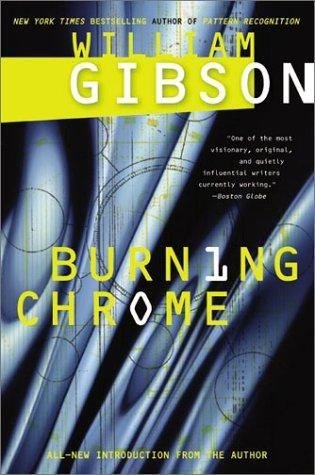
1986 · Science Fiction · Cyberpunk
The collected early stories in which cyberpunk assembled itself: 'Johnny Mnemonic' (data courier with a stolen corner of his own skull), 'The Gernsback Continuum' (a photographer haunted by the raygun-gothic future that never happened — the movement's manifesto disguised as a ghost story), 'Dogfight', 'Hinterlands', and the title story, where the word 'cyberspace' first appeared in print while two hustlers burn a money-laundering legend named Chrome. Three collaborations (with Sterling, Shirley and Michael Swanwick) map the scene's borders. The styles are already complete: chrome, rain, loss.
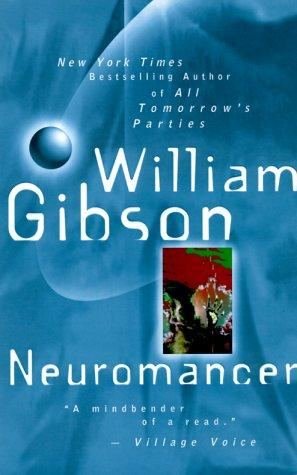
1984 · The Sprawl Trilogy, book 1 · Science Fiction · Cyberpunk
Case, a burnt-out console cowboy whose nervous system was deliberately crippled by his last employers, is rebuilt and hired for a run he doesn't understand, alongside Molly Millions — mirrored lenses, retractable razors — by a dying Special Forces officer who is himself a glove on someone else's hand. The hand belongs to Wintermute, half of an AI whose other half it is legally forbidden to become. Orbital Rastafarian tugs, a clan of inbred corporate immortals, the Turing police and the matrix itself: Gibson wrote the future's user manual in noir, on a manual typewriter, terrified the whole time that Blade Runner had already scooped him.
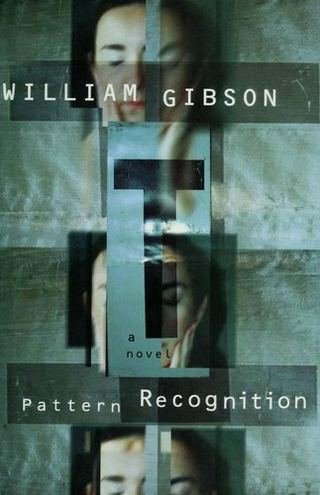
2003 · Science Fiction · Literary SF, Cyberpunk
Cayce Pollard is allergic to brands — literally, phobically; a Michelin Man can put her on the floor — which makes her priceless as a 'coolhunter' who can taste whether a logo will fly. Hired by the sinister ad mogul Hubertus Bigend to trace the maker of 'the footage' — anonymous film fragments seeding obsessive online communities — she follows it from Camden to Tokyo to Moscow, in the long shadow of her father's disappearance on 9/11. Gibson's first novel set in the present, on the argument that the present had become science fiction; the technique is unchanged, the estrangement total.
Series
1925–2017 · British
The bridge between British SF's catastrophe tradition and the New Wave he helped detonate.
b. 1939 · Canadian
The Handmaid's Tale is the most culturally active dystopia of the present era — its red cloaks now appear at actual legislative hearings — and Atwood's prestige carried speculative fiction into rooms that had pretended not to know its name.
1930–2009 · British
The most important literary stylist British SF has produced, the New Wave's central planet, and a prophet whose obsessions — media spectacle, manufactured desire, communities seceding from reality — simply became the news.
