Author Profile · Science Fiction
J. G. Ballard
1930–2009 · British
Who was J. G. Ballard?
Interned as a boy by the Japanese in Shanghai — the material of his mainstream bestseller Empire of the Sun — Ballard came home to an England he observed like a visiting anthropologist and spent fifty years dissecting. He announced that the only truly alien planet is Earth, swapped outer space for 'inner space', and wrote it all from a semi in Shepperton: drowned and crystal worlds, drained swimming pools, car-crash eroticism, gated communities curdling into savagery. His fiction proposes that beneath the motorway flyover and the business park, the psychopathology is already in place and merely waiting for an excuse. The adjective 'Ballardian' now does daily journalistic service, which would have amused him.
Why they matter
The most important literary stylist British SF has produced, the New Wave's central planet, and a prophet whose obsessions — media spectacle, manufactured desire, communities seceding from reality — simply became the news.
Essential books — and where to start
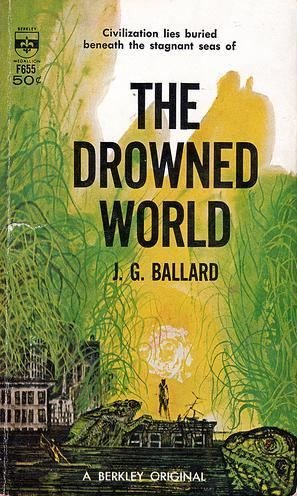
1962 · Science Fiction · Post-Apocalyptic, Climate Fiction, New Wave SF
Solar instability has melted the ice caps; London is a chain of steaming lagoons threaded between drowned hotels, patrolled by iguanas and a dwindling scientific survey team. Biologist Robert Kerans feels the heat rewinding evolution inside him — recurring dreams of a Triassic sun that the novel treats not as madness but as homecoming. When the looter Strangman arrives to drain the lagoons, restoration reads as desecration. Ballard's first major statement: the catastrophe novel inverted, with a protagonist who collaborates with the apocalypse and walks south, at the end, towards the sun.
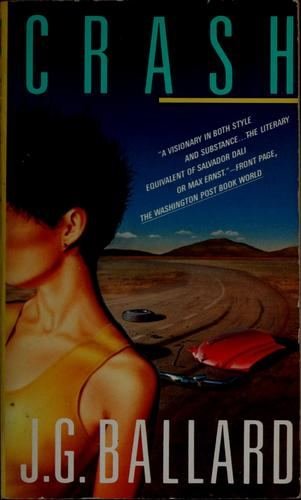
1973 · Science Fiction · New Wave SF, Literary SF
After his own motorway accident, a television producer named James Ballard is drawn into the orbit of Vaughan, a scarred 'hoodlum scientist' who choreographs and photographs car crashes as erotic events, and whose final project is a head-on collision with Elizabeth Taylor. Written in prose of surgical detachment that makes the pornography of metal and wound somehow clinical, Crash is the purest distillation of Ballard's thesis that technology doesn't serve our desires — it breeds new ones. One publisher's reader famously reported: 'This author is beyond psychiatric help. Do not publish.' They published.
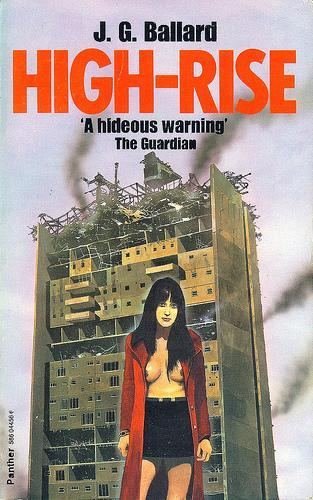
1975 · Science Fiction · Dystopia, New Wave SF, Satirical SF
'Later, as he sat on his balcony eating the dog...' — from that opening line, Ballard rewinds three months to show a luxury tower of two thousand affluent professionals descending, floor by floor, into tribal war over swimming pools, lifts and garbage chutes. The building works perfectly; that's the problem. Dr Robert Laing, the documentary-maker Wilder and the architect Royal in his penthouse map the new hierarchy as the residents discover they prefer the savagery — commuting out to work each morning in clean suits, returning at dusk to the raids. Civilisation as a veneer one power-cut thick.
1925–2017 · British
The bridge between British SF's catastrophe tradition and the New Wave he helped detonate.
b. 1939 · Canadian
The Handmaid's Tale is the most culturally active dystopia of the present era — its red cloaks now appear at actual legislative hearings — and Atwood's prestige carried speculative fiction into rooms that had pretended not to know its name.
1920–2012 · American
The writer who proved science fiction could be literature without apologising.
