Author Profile · Science Fiction
Brian Aldiss
1925–2017 · British
Who was Brian Aldiss?
Burma campaign veteran, Oxford bookseller, and for six decades the restless conscience of British science fiction. Aldiss could write anything and made a point of proving it: claustrophobic generation-ship mystery (Non-Stop), vegetable apocalypse (Hothouse), a Britain sterilised and ageing into silence (Greybeard), experimental anti-novels in the New Worlds era, and the magisterial planetary symphony of the Helliconia trilogy. He also wrote the genre's first proper history, Billion Year Spree, where he crowned Mary Shelley the mother of it all — an argument the field eventually conceded. President of British SF in every sense but the ceremonial, and a Grand Master from 2000.
Why they matter
The bridge between British SF's catastrophe tradition and the New Wave he helped detonate. His criticism gave the genre its origin story, his fiction kept enlarging its borders, and Helliconia remains the benchmark for deep-time worldbuilding.
Essential books — and where to start
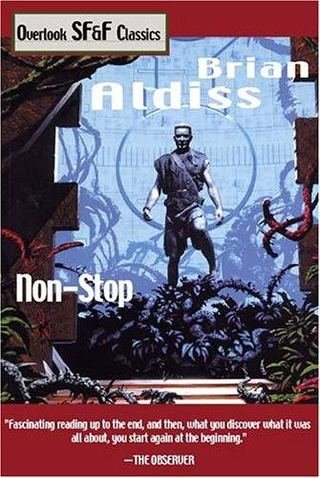
1958 · Science Fiction · Hard SF, Post-Apocalyptic
Roy Complain, hunter of a tribe that farms hydroponic tangle in endless corridors, joins a renegade priest's expedition through Deadways towards the legendary Forwards — and the discovery, assembled clue by clue, of what the corridors actually are and how long the journey has lasted. Aldiss's first SF novel takes the generation-starship premise (known to insiders from Heinlein's 'Universe') and gives it a distinctly British inflection: entropy, dwarfed humanity and authority telling structural lies. Published in America, with vandalous helpfulness, as Starship.
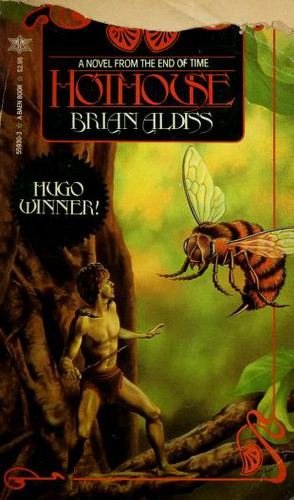
1962 · Science Fiction · Science Fantasy, Post-Apocalyptic
Aeons hence, a tidally locked Earth swelters under a swollen sun, the Moon is webbed to the planet by mile-long spider-plant traversers, and vegetation has devoured the animal kingdom — humanity survives as green, thumb-sized tribes in the branches of a single world-girdling banyan. Young Gren's journey through this magnificent bestiary (the tummy-belly men, the intelligent fungus Morel, which colonises his head and turns mentor-parasite) is pure invention at full throttle. Scientific plausibility was cheerfully sacrificed; sense of wonder profited enormously.

1964 · Science Fiction · Post-Apocalyptic, Literary SF
Radiation from orbital weapons tests has sterilised humanity; the youngest people alive are in their fifties, England has crumbled into superstitious fiefdoms along a wild Thames, and Algy 'Greybeard' Timberlane and his wife Martha boat downstream through the species' long retirement. Aldiss alternates the river journey with flashbacks through the collapse, and salts the twilight with rumours — gnomes in the woods, children glimpsed at a distance — that may be senility, hucksterism or hope. The tenderest of all catastrophe novels: less about extinction than about what a marriage is for.
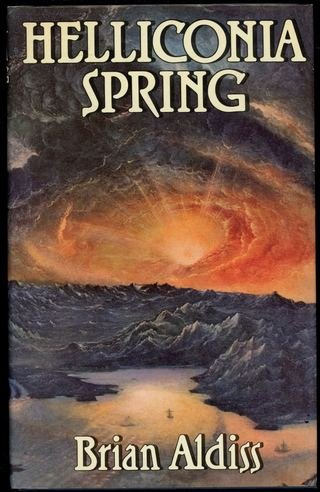
1982 · Helliconia, book 1 · Science Fiction · Hard SF, Anthropological SF, Epic Fantasy
Helliconia orbits its sun Batalix, which orbits the supergiant Freyr: a Great Year two and a half thousand Earth-years long, with centuries-deep winters in which the antlered phagors rule and human civilisation gutters to embers. Spring is the thaw — the village of Oldorando swelling into a city, religion and trade and plague (the necessary, terrible bone fever) returning on schedule — all watched by the orbiting Earth station Avernus, whose observers may not interfere. Aldiss builds a world where climate is protagonist and history is seasonal, decades before 'cli-fi' had a name.
Series
1930–2009 · British
The most important literary stylist British SF has produced, the New Wave's central planet, and a prophet whose obsessions — media spectacle, manufactured desire, communities seceding from reality — simply became the news.
b. 1967 · American
The most honoured short-fiction writer per page in genre history and the modern standard for conceptual rigour: proof that SF's core engine — the idea, followed honestly — still outperforms everything bolted around it.
b. 1942 · American
The New Wave's prodigy and the genre's first great Black voice, who expanded what SF prose could do and whose criticism taught the field to understand itself.
