Who is Terry Brooks?
An Illinois small-town lawyer who wrote The Sword of Shannara over seven years of evenings and, in 1977, became the proof of concept for the entire fantasy publishing industry: the first fantasy paperback to hit the New York Times trade bestseller list, launched by Lester and Judy-Lynn del Rey as the test case for whether readers hungry for more Tolkien would buy something shaped like him. They would, in millions. Critics noted the resemblance with knives out; Brooks spent the next forty-odd years answering with sheer staying power — the Shannara books deepened into their own multi-era saga (secretly a post-apocalyptic future, it emerged), the Magic Kingdom of Landover added comedy, and The Word and the Void brought his demons home to the American present.
Why they matter
The author whose success built the commercial epic fantasy category: Del Rey's Shannara experiment created the market that Jordan, Eddings and everyone since sold into. Few writers have been more consequential for the business of the genre.
Essential books — and where to start
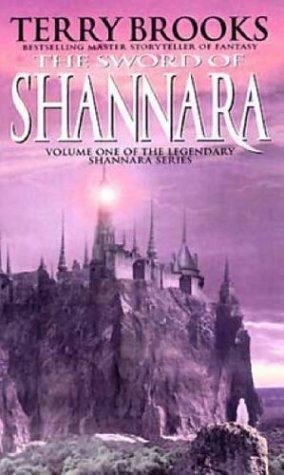
1977 · Shannara, book 1 · Fantasy · Epic Fantasy, Heroic Fantasy
Half-elven Shea Ohmsford, last heir of the Shannara bloodline, is roused from his Vale village by the druid Allanon: the Warlock Lord has returned, and only the legendary Sword of Shannara — and only Shea's hand on it — can end him. The fellowship, the flight from black-winged hunters, the broken party and the siege all follow Tolkien's blueprint closely enough that critics filed lawsuits-by-review; the Sword's actual power, though — it reveals truth, and the Warlock Lord's unmaking is self-knowledge — is Brooks's own, and the book's engine is honest momentum. Readers voted with thirty-odd million Shannara purchases over the decades that followed.
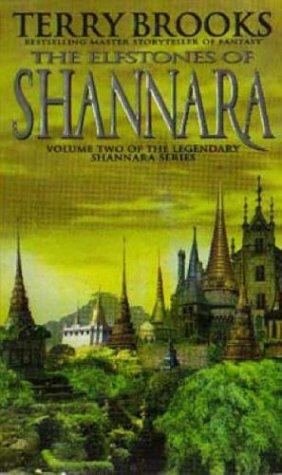
1982 · Shannara, book 2 · Fantasy · Epic Fantasy, Dark Fantasy
The Ellcrys — the sentient tree whose existence imprisons an ancient horde of demons behind the Forbidding — is dying, and its rebirth requires an elven Chosen to carry its seed to the Bloodfire: a journey that will cost Amberle Elessedil more than her life, in the genre's most quietly brutal use of the sacrifice plot. Wil Ohmsford guards her with Elfstones he can barely use, the demon Reaper stalks them with slasher-film patience, and the Elven defence of Arborlon gives Brooks his first great battle narrative. The consensus pick for the best Shannara novel — darker, sadder and entirely out from Tolkien's shadow.
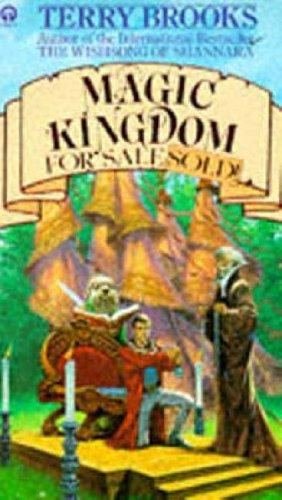
1986 · Magic Kingdom of Landover, book 1 · Fantasy · Portal Fantasy, Comic Fantasy
Ben Holiday, a Chicago trial lawyer hollowed out by his wife's death, finds a kingdom listed in a luxury Christmas catalogue: Landover, one million dollars, magic included. It is not a scam, exactly — there is a kingdom — but the treasury is empty, the barons won't kneel, the dragon is at large, the court wizard's spells misfire, the scribe is a talking dog, and twenty previous purchasers have been refunded or eaten. Holiday's grief-stricken decision to stay and actually do the job turns catalogue whimsy into one of fantasy's better midlife-crisis novels: kingship as the ultimate career change.
Series
b. 1945 · American
Magician is one of the defining epic fantasies of its era — a fixture of fantasy starter lists for forty years — and the Midkemia model (gaming world to publishing empire) prefigured the genre's whole relationship with tabletop culture.
b. 1972 · American
The defining SFF writer of the 2010s: the unprecedented Hugo three-peat marked the genre's centre of gravity shifting — formally, demographically and thematically — and the Broken Earth is already canon, taught from secondary schools to doctoral seminars.
1934–2011 · British
The bridge between the Inklings and modern fantasy's craft: her deconstructions anticipated and outwitted the genre's clichés decades before 'subversion' became a selling point, and her influence runs through Rowling's generation whether acknowledged or not.
