Who is Raymond E. Feist?
A San Diego games designer whose home Dungeons & Dragons-style campaign world — Midkemia, built collectively by his Friday-night group — became the foundation of one of fantasy's longest commercial empires. Magician (1982) introduced the orphan keep-boy Pug, apprenticed to wizardry as a rift in space-time admits invaders from the Tsurani Empire: Tolkien's furniture invaded by Shogun, war fought across two fully realised worlds. The Riftwar Cycle ultimately ran to some thirty volumes across multiple generations, while the Empire trilogy — co-written with Janny Wurts from the invaders' side — gave the saga its political masterpiece. Feist's gift is momentum: armies, magicians and merchant princes moved with a games-master's unsentimental efficiency.
Why they matter
Magician is one of the defining epic fantasies of its era — a fixture of fantasy starter lists for forty years — and the Midkemia model (gaming world to publishing empire) prefigured the genre's whole relationship with tabletop culture.
Essential books — and where to start
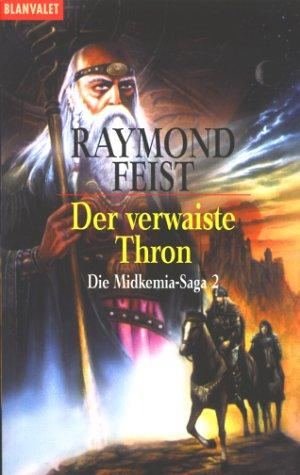
1982 · The Riftwar Cycle, book 1 · Fantasy · Epic Fantasy, Portal Fantasy, Heroic Fantasy
Pug, an orphan keep-boy at Crydee, is taken as apprentice by the magician Kulgan; his friend Tomas dreams of soldiering. Both get their wishes in the worst way when a rift in space-time opens and the Tsurani — a Kelewanese empire of bronze, honour politics and house warfare, fantasy's answer to feudal Japan via Tekumel — invade Midkemia for its metal. The Riftwar takes Pug from slavery in the enemy's world to mastery of two magics, while Tomas inherits the armour (and appetites) of a dead Dragon Lord. Split in two for later editions (Apprentice and Master), it remains the great two-worlds epic: a war where the reader is eventually rooting for both sides.
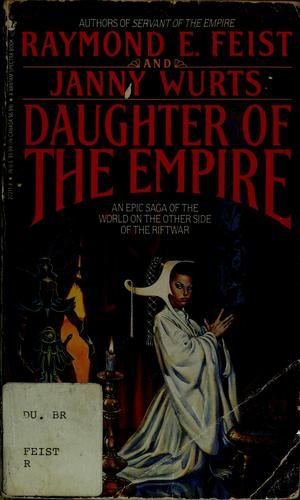
1987 · Fantasy · Epic Fantasy, Historical Fantasy
Co-written with Janny Wurts. On Kelewan, the Tsurani homeworld, seventeen-year-old Mara of the Acoma is moments from taking religious vows when word arrives: her father and brother are dead in the Riftwar (betrayed on the other side of the events of Magician), and she is now Ruling Lady of a great house reduced to a handful of soldiers, with enemies moving before the funeral gongs fade. Her weapons are marriage, etiquette, grain contracts and the deadly formalism of the Game of the Council — fantasy's best politics-as-combat narrative, where a seating arrangement can be an assassination. The trilogy it opens is the Riftwar's masterpiece.
Series
b. 1974 · British
The defining grimdark author after Martin: Abercrombie perfected the character-voice-driven, blackly comic register that dominates modern adult fantasy, and his fight scenes and moral hangovers are the subgenre's house style.
b. 1944 · American
The author whose success built the commercial epic fantasy category: Del Rey's Shannara experiment created the market that Jordan, Eddings and everyone since sold into.
1931–2009 · American
The gateway epic fantasist for a generation of 1980s–90s readers: the Belgariad's chatty, character-first formula taught millions that doorstop fantasy could be comfort reading, and its fingerprints are on every found-family quest since.
